I used to think dandruff and dry scalp were basically the same thing. Then I realized I was treating my scalp completely wrong for years.
The Confusion Nobody Talks About
You know that moment when you’re scratching your head and wondering if you should switch shampoos? Again? Yeah, i have been there. The problem is that flakes don’t automatically mean you have dandruff. Sometimes your scalp is just dying of thirst.
The annoying part? They look almost identical. But treating dry scalp like dandruff or vice versa is like putting sunscreen on a sunburn. It sounds reasonable until you realize it makes things worse.
So What’s Actually Dandruff?
Dandruff happens when your scalp gets oily and irritated at the same time. It’s not just flakes, it’s your scalp throwing a fit because something’s out of balance.
When you have dandruff, you’ll see:
- Bigger, thicker flakes that sometimes look yellowish or oily
- Your scalp looks shiny or wet, even after you just washed it
- Itching that is honestly annoying
- Flakes that stick to your hair
- Bad smell
The worst part? It usually gets worse when you use a bunch of products. Like, you’re trying to fix it, but you’re actually making it angrier.
Dry Scalp Is a Totally Different Beast
Dry scalp is your skin literally running out of water. It’s not an oil problem, it’s a moisture problem. Your scalp barrier is compromised, and everything just dries out.
With dry scalp, you get:
- Small, flaky, white pieces that feel powdery
- A tight, uncomfortable feeling on your head
- Itching that gets way worse when it’s cold or when you’re inside with the heat on
- Your hair feeling kinda dull and maybe even breaking easier
- Everything feeling rough, not oily
This one actually gets better in summer and worse in winter for most people.
Here’s How to Actually Tell Them Apart
Dandruff vibes:
- Oily scalp, flaky scalp (worst combo)
- Bigger, stickier flakes
- Itching that wont quit
- Gets worse when you use lots of products
- Usually a smell problem too
Dry scalp vibes:
- Tight, uncomfortable feeling
- Fine, powdery flakes everywhere
- Itching that comes and goes based on weather
- Hair feels weak and breaks more
- Clean, no smell issue
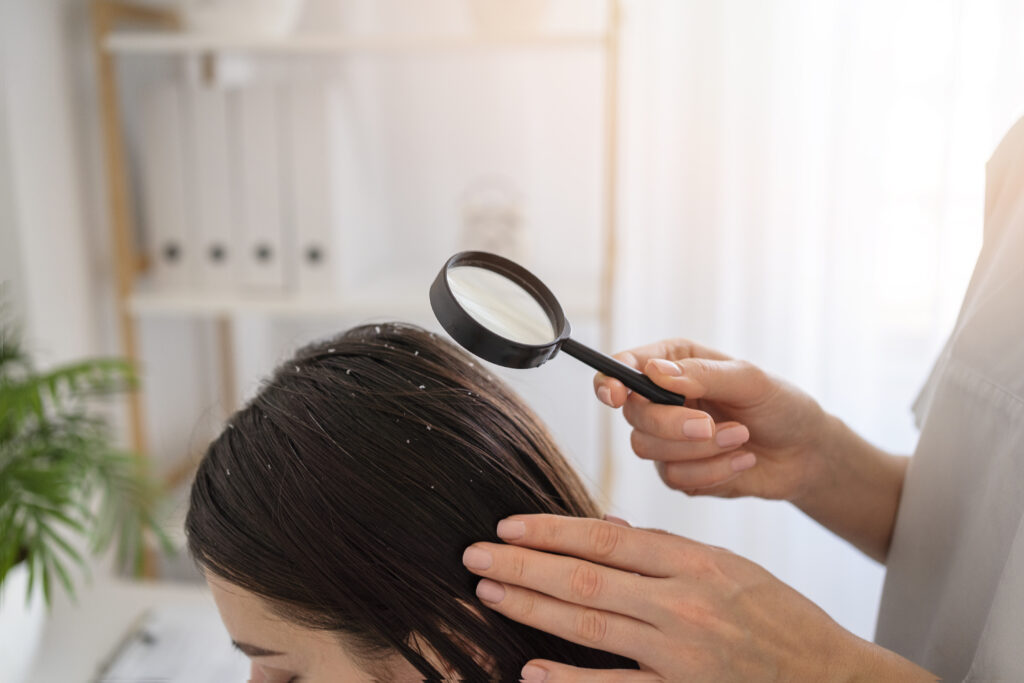
Real talk: touch your scalp. Does it feel oily or greasy? Dandruff. Does it feel tight and rough? Dry scalp.
Why You Have Dandruff (And It’s Not Your Fault)
A few things can trigger this mess:
- Your scalp just naturally produces too much oil (genetics, sorry)
- You’re washing too much or too little both cause problems
- Product buildup from shampoos, conditioners, all of it
- A yeast called Malassezia decides to throw a party on your scalp
- Stress or hormones messing with your oil production
- Your hair products have something your scalp hates
Everyone’s different. What causes dandruff in one person might do nothing to someone else.
Why Your Scalp Is So Dry
Usually, it’s environmental stuff:
- Winter air is literally drying you out
- You’re taking hot showers (feels good, but wrecks your scalp)
- Blow dryers on high heat, flat irons, curling everything
- You’re washing your hair too often, stripping away natural oils
- Your house heat in winter or AC in summer
- Hard water that leaves mineral buildup
- Chlorine from pools
These are all fixable once you notice them.
What Actually Works (From Someone Who’s Done This)
Stop guessing. Here’s what you should actually do:
- Figure out which one you have first. Seriously. This is step one.
- If it’s dandruff: Use a clarifying shampoo to get buildup out. You need to clear the slate.
- If it’s dry scalp: Use a hydrating shampoo and moisturizing conditioner. Your scalp is thirsty.
- Temperature matters. Hot water is your enemy. Lukewarm is your friend.
- Space out your washes. Give your scalp a chance to regulate itself.
- Stop touching it so much. I know it itches, but scratching makes it worse.
- Drink more water. Seriously, your scalp hydration starts from inside.
- Give it time. Three to four weeks minimum before you assume something’s working or not.
Stop Doing These Things Immediately
- Jumping between five different shampoos in a month
- Using hot water
- Rubbing your scalp with your nails
- Assuming the first product will fix everything
- Using half a bottle of dry shampoo every day
- Blow drying on the highest heat setting
- Wearing super tight braids or ponytails constantly
These habits will sabotage you every single time.
Real Talk About Getting Better
Your scalp didn’t get like this overnight, and it won’t fix overnight either. But once you actually identify what you’re dealing with and commit to a proper routine, things change.
I went from flaky and uncomfortable to normal-looking hair in about five weeks. Not overnight. Five weeks. But it was worth it not to feel gross all the time.
The key is matching your treatment to the actual problem. Dandruff needs clarifying and regulation. Dry scalp needs moisture and gentleness. They’re opposite problems with opposite solutions.
Start paying attention this week. Touch your scalp. Look at what the flakes actually look like. Notice when the itching happens. That awareness is seriously half the battle.
One More Thing
This is just general information based on common scalp issues. Everyone’s scalp is different depending on genetics, climate, water quality, and what you’re doing to it daily. If you’ve got serious itching, a scalp that looks infected, flaking that won’t stop after a month of care, or anything that seems really wrong, go see a dermatologist. They can actually look at your scalp and tell you exactly what’s going on instead of you guessing.
Dandruff vs Dry Scalp – Understanding the Key Differences
I used to think dandruff and dry scalp were basically the same thing. Then I realized I was treating my scalp completely wrong for years.
The Confusion Nobody Talks About
You know that moment when you’re scratching your head and wondering if you should switch shampoos? Again? Yeah, i have been there. The problem is that flakes don’t automatically mean you have dandruff. Sometimes your scalp is just dying of thirst.
The annoying part? They look almost identical. But treating dry scalp like dandruff or vice versa is like putting sunscreen on a sunburn. It sounds reasonable until you realize it makes things worse.
So What’s Actually Dandruff?
Dandruff happens when your scalp gets oily and irritated at the same time. It’s not just flakes, it’s your scalp throwing a fit because something’s out of balance.
When you have dandruff, you’ll see:
- Bigger, thicker flakes that sometimes look yellowish or oily
- Your scalp looks shiny or wet, even after you just washed it
- Itching that is honestly annoying
- Flakes that stick to your hair
- Bad smell
The worst part? It usually gets worse when you use a bunch of products. Like, you’re trying to fix it, but you’re actually making it angrier.
Dry Scalp Is a Totally Different Beast
Dry scalp is your skin literally running out of water. It’s not an oil problem, it’s a moisture problem. Your scalp barrier is compromised, and everything just dries out.
With dry scalp, you get:
- Small, flaky, white pieces that feel powdery
- A tight, uncomfortable feeling on your head
- Itching that gets way worse when it’s cold or when you’re inside with the heat on
- Your hair feeling kinda dull and maybe even breaking easier
- Everything feeling rough, not oily
This one actually gets better in summer and worse in winter for most people.
Here’s How to Actually Tell Them Apart
Dandruff vibes:
- Oily scalp, flaky scalp (worst combo)
- Bigger, stickier flakes
- Itching that wont quit
- Gets worse when you use lots of products
- Usually a smell problem too
Dry scalp vibes:
- Tight, uncomfortable feeling
- Fine, powdery flakes everywhere
- Itching that comes and goes based on weather
- Hair feels weak and breaks more
- Clean, no smell issue
Real talk: touch your scalp. Does it feel oily or greasy? Dandruff. Does it feel tight and rough? Dry scalp.
Why You Have Dandruff (And It’s Not Your Fault)
A few things can trigger this mess:
- Your scalp just naturally produces too much oil (genetics, sorry)
- You’re washing too much or too little both cause problems
- Product buildup from shampoos, conditioners, all of it
- A yeast called Malassezia decides to throw a party on your scalp
- Stress or hormones messing with your oil production
- Your hair products have something your scalp hates
Everyone’s different. What causes dandruff in one person might do nothing to someone else.
Why Your Scalp Is So Dry
Usually, it’s environmental stuff:
- Winter air is literally drying you out
- You’re taking hot showers (feels good, but wrecks your scalp)
- Blow dryers on high heat, flat irons, curling everything
- You’re washing your hair too often, stripping away natural oils
- Your house heat in winter or AC in summer
- Hard water that leaves mineral buildup
- Chlorine from pools
These are all fixable once you notice them.
What Actually Works (From Someone Who’s Done This)
Stop guessing. Here’s what you should actually do:
- Figure out which one you have first. Seriously. This is step one.
- If it’s dandruff: Use a clarifying shampoo to get buildup out. You need to clear the slate.
- If it’s dry scalp: Use a hydrating shampoo and moisturizing conditioner. Your scalp is thirsty.
- Temperature matters. Hot water is your enemy. Lukewarm is your friend.
- Space out your washes. Give your scalp a chance to regulate itself.
- Stop touching it so much. I know it itches, but scratching makes it worse.
- Drink more water. Seriously, your scalp hydration starts from inside.
- Give it time. Three to four weeks minimum before you assume something’s working or not.
Stop Doing These Things Immediately
- Jumping between five different shampoos in a month
- Using hot water
- Rubbing your scalp with your nails
- Assuming the first product will fix everything
- Using half a bottle of dry shampoo every day
- Blow drying on the highest heat setting
- Wearing super tight braids or ponytails constantly
These habits will sabotage you every single time.
Real Talk About Getting Better
Your scalp didn’t get like this overnight, and it won’t fix overnight either. But once you actually identify what you’re dealing with and commit to a proper routine, things change.
I went from flaky and uncomfortable to normal-looking hair in about five weeks. Not overnight. Five weeks. But it was worth it not to feel gross all the time.
The key is matching your treatment to the actual problem. Dandruff needs clarifying and regulation. Dry scalp needs moisture and gentleness. They’re opposite problems with opposite solutions.
Start paying attention this week. Touch your scalp. Look at what the flakes actually look like. Notice when the itching happens. That awareness is seriously half the battle.
One More Thing
This is just general information based on common scalp issues. Everyone’s scalp is different depending on genetics, climate, water quality, and what you’re doing to it daily. If you’ve got serious itching, a scalp that looks infected, flaking that won’t stop after a month of care, or anything that seems really wrong, go see a dermatologist. They can actually look at your scalp and tell you exactly what’s going on instead of you guessing.
Disclaimer
This content is for informational purposes only and should not be considered medical advice. Hair and scalp responses vary depending on individual conditions and personal care routines.