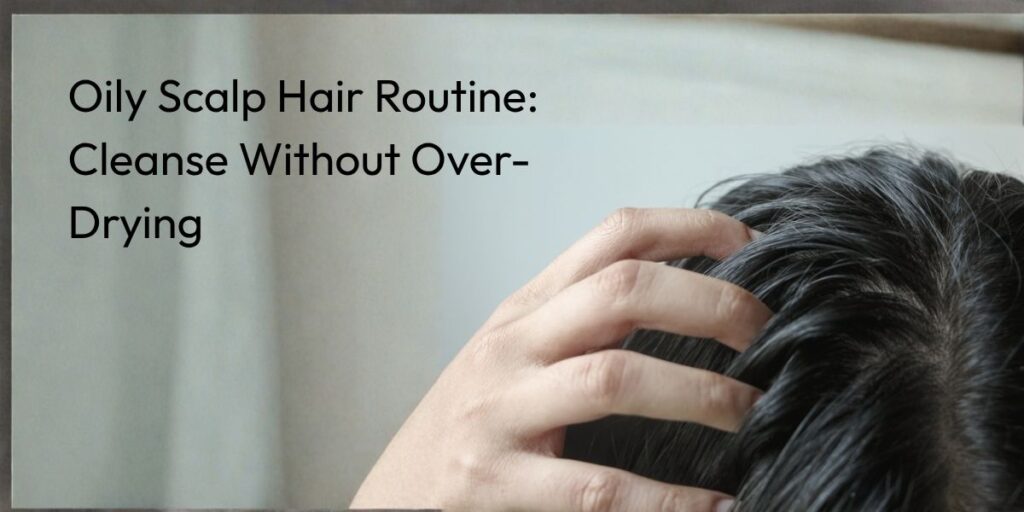
I know it can be really frustrating to deal with a scalp. You wash your hair in the morning. By the next day it already looks greasy. This is because your scalp is producing much oil.
The problem with oily scalp hair is that it can feel heavy and be difficult to style… The solution is not to wash your hair more often. In fact washing your hair much can make the problem worse.
So what is the key to dealing with a scalp? It is finding a balance between keeping your scalp clean and maintaining its natural moisture barrier.
Lets explore how to build a hair care routine for an oily scalp without causing dryness or irritation.
Why Does the Scalp Become Oily?
Your oily scalp is caused by the glands in your scalp that produce sebum, a natural oil that helps protect and moisturize the skin and hair.
Some people naturally produce sebum than others. Common causes of a scalp include genetics, hormonal fluctuations, hot and humid weather, product buildup, frequent touching of the hair, overwashing and stress.
Having a scalp does not necessarily mean your hair is unhealthy. It simply means your scalp produces oil.
Signs of an Oily Scalp
You may have a scalp if your hair becomes greasy quickly after washing your roots appear flat or limp your scalp feels oily to the touch your hair lacks volume product buildup occurs easily or you feel the need to wash frequently.
Understanding your scalp type can help you choose the routine for your oily scalp hair.
Step 1: Use a Gentle Cleansing Shampoo
The foundation of any oily scalp routine is cleansing. Many people assume they need the shampoo possible but overly harsh products can strip the scalp and trigger even more oil production.
A gentle shampoo can help remove oil cleanse the scalp effectively reduce buildup and maintain scalp comfort. Focus shampoo on the scalp and roots rather than the hair lengths.
Step 2: Wash as Needed
There is no rule for how often oily hair should be washed. Some people may need to wash every day every day or a few times per week.
The ideal frequency depends on oil production, lifestyle, climate and hair type. The goal is to keep the scalp without excessive cleansing.
Step 3: Condition the Lengths and Ends
A common mistake is skipping conditioner completely. Even if your scalp is oily your hair lengths may still need moisture.
Apply conditioner to the mid-lengths and ends. Avoid applying it to the scalp unless specifically instructed by the product.
This helps maintain softness without increasing scalp oiliness.
Step 4: Remove Product Buildup
Hair products can accumulate on the scalp and hair over time. Buildup may contribute to looking hair increased greasiness and reduced volume.
Occasional deeper cleansing can help maintain a scalp environment.
Step 5: Do Not Use Much Dry Shampoo
Dry shampoo is good for when you do not have time to wash your hair.. You should still wash your hair regularly. If you use shampoo too much it can cause problems like dry shampoo building up, on your hair your scalp getting uncomfortable and your hair looking bad.
You should use shampoo only when you really need it, not every single day. Dry shampoo is a solution but it is not something you should rely on all the time.
Step 6: Be Careful With Oils and Heavy Styling Products
Heavy products can weigh hair down. Make oily roots appear greasier. If you use hair oils, serums or creams focus primarily on the lengths. Ends.
Avoid applying amounts near the scalp.
Step 7: Keep Your Hands Out of Your Hair
Touching your hair frequently transfers oil from your hands to your scalp and strands. This can make hair appear greasy faster.
Try to minimize touching throughout the day.
Step 8: Wash Brushes and Combs Regularly
Hair tools can collect oil, product residue and dirt. Using brushes may reintroduce buildup to freshly washed hair.
Regular cleaning helps maintain a scalp environment.
Best Ingredients for an Oily Scalp
Many people with scalps benefit from ingredients that help cleanse and balance excess oil. Examples include acid, tea tree oil, niacinamide, zinc-based ingredients and gentle botanical cleansers.
Choose products that suit your scalp needs.
Common Mistakes That Make an Oily Scalp Worse
Overwashing can disrupt the scalps balance. Using hot water can irritate the scalp and contribute to dryness.
Applying conditioner to the roots can make the scalp appear oilier and reduce volume. Heavy product layering can create buildup. Make hair look greasy.
Skipping scalp care is also a mistake. Healthy hair starts with a scalp.
Can Diet Affect an Oily Scalp?
Diet may influence skin and scalp health. A balanced eating pattern that includes protein, fruits, vegetables, healthy fats and adequate hydration supports well-being, including hair and scalp health.
When Should You See a Dermatologist?
Consider advice if you experience severe scalp oiliness, persistent itching, redness, flaking or sudden changes in scalp condition.
A dermatologist can help identify causes and recommend appropriate treatment options.
Sample Oily Scalp Hair Routine
When it is time, for a wash I do the following things.
1. I use a cleansing shampoo on my oily scalp hair.
2. After that I put conditioner on the lengths. Ends of my oily scalp hair.
3. If my oily scalp hair needs it I use styling products.
During the week I do these things to take care of my oily scalp hair.
1. I make sure to do a cleansing of my oily scalp.
2. I remove the buildup of products from my oily scalp hair.
3. I clean my combs so that they do not get all dirty and messy.
Daily Habits
- Avoid touching the hair
- Use products
- Protect the scalp from irritation
Consistency often leads to the best results.
Final Thoughts
Taking care of your scalp is not about getting rid of all the oil. It is about finding a balance. Your scalp makes oil for a reason. If you remove the oil much it can cause more problems. Your scalp needs some oil to stay healthy. Managing your scalp is, about keeping this balance.
A gentle cleansing routine, conditioner placement avoiding heavy buildup and choosing products suited to your scalp type can help keep your hair feeling fresh without causing dryness.
With a routine and healthy habits it is possible to maintain a clean comfortable scalp while keeping your hair soft and manageable.
Disclaimer
This article is here to help and is not meant to be taken as advice. Scalp problems and hair worries are different for everyone. If you have scalp troubles or are worried about much oil, on your scalp. you should talk to a dermatologist or a qualified healthcare professional.
Asked Questions (FAQs)
1. Why does my scalp get oily quickly?
Genetics, hormones, climate, product buildup and overwashing can all contribute to increased oil production.
2. Should I wash hair every day?
It depends on your scalp type and lifestyle. Some people may need washing while others can wash less frequently.
3. Can conditioner make my scalp oilier?
Conditioner can contribute to greasiness if applied directly to the scalp. It is usually best applied to the mid-lengths. Ends.
4. Is shampoo bad for an oily scalp?
Dry shampoo can be useful occasionally. Relying on it too often may lead to product buildup and scalp discomfort.
5. What ingredients are good for a scalp?
Ingredients such, as salicylic acid, tea tree oil, niacinamide and zinc-based compounds are commonly used in products designed for oily scalps.