Scalp care has shifted from being an afterthought to a major focus in professional haircare. Kérastase’s Longevity range represents a serious effort to tackle issues related to ageing scalps. However, “anti-ageing scalp serum” might sound like marketing jargon, so let’s dissect what these products are designed to do, how they can be part of an Indian haircare routine, and whether their price is justified for you.
First, What Does an “Ageing Scalp” Even Mean?
When we think about ageing, we often focus on the skin and face, but the scalp ages in similar ways. As cell turnover slows, the scalp’s barrier becomes less effective at retaining moisture. Sebum production may become imbalanced, leading to drier or patchily oilier scalps. Blood microcirculation diminishes, affecting the nourishment of hair follicles. These changes lead to hair that becomes finer, sparser, slower-growing, and less responsive than in one’s twenties.
For Indians, the equation is more complex due to specific stressors. Hard water in cities like Delhi, Mumbai, and Bengaluru leaves mineral deposits on the scalp. High pollution levels, along with the heat and humidity for much of the year, force the scalp to work overtime, potentially accelerating ageing even in people in their late twenties and thirties.
What Kérastase’s Longevity Scalp Serums Are Targeting
Kérastase has developed this range with the belief that the scalp needs the same kind of serum-based care that we often reserve for our faces. The Longevity line features scalp serums targeting reduced follicular vitality, thinning of scalp skin, and weakened microcirculation. The emphasis here is more on the scalp’s condition than just the hair fibre.
Though I can’t list specific ingredients as I haven’t verified them at this moment, scalp longevity serums typically employ certain methods. They might include ingredients that support cellular energy and renewal at the follicle level, elements that help fortify the scalp’s moisture barrier, and actives that aim to encourage blood flow to the follicles. These serums often blend insights from both trichology and dermatology, placing them at a higher price bracket compared to standard conditioners.
It’s important to clarify that these serums aren’t clinical hair-fall treatments. If you’re facing significant, sudden, or patterned hair loss, it’s advisable to consult a dermatologist or trichologist first, rather than relying on a cosmetic serum. Longevity serums focus on mitigating the gradual, age-related decline in scalp health and hair density, a distinct issue.
Who Is This Actually For?
Consider your situation honestly before committing to this range. It makes the most sense if you are:
- In your late thirties, forties, or beyond, noticing hair that feels thinner or takes longer to grow
- Someone with a largely healthy scalp looking to sustain it proactively
- Already following a quality haircare routine and aiming to enhance it with scalp-specific care
- Experiencing a scalp that feels less supple or sometimes itchy or dry without any visible inflammatory cause
If you have an active scalp condition such as seborrhoeic dermatitis, psoriasis, or considerable dandruff, it’s better to address those first. Using a premium serum on an untreated condition is likely misallocated spending.
If your budget is limited and you’re primarily concerned with basic scalp hydration, there are more budget-friendly scalp oils and lightweight treatments available. The Kérastase Longevity range sits at the upper end of professional pricing, ranging from several hundred to a few thousand rupees per product based on format, city, and retailer. It’s a purchase that should be made carefully, not impulsively.
How to Use a Scalp Serum Correctly
Even the finest serum won’t be effective if applied incorrectly. Here’s how to use a scalp longevity serum properly in an Indian context.
- Start with a clean scalp. Scalp serums need direct contact with the skin, not a layer of styling product, dry shampoo, or mineral buildup. Use a clarifying or scalp-focused shampoo initially. If hard water is an issue in your city, consider using a chelating shampoo once or twice a month to eliminate mineral deposits.
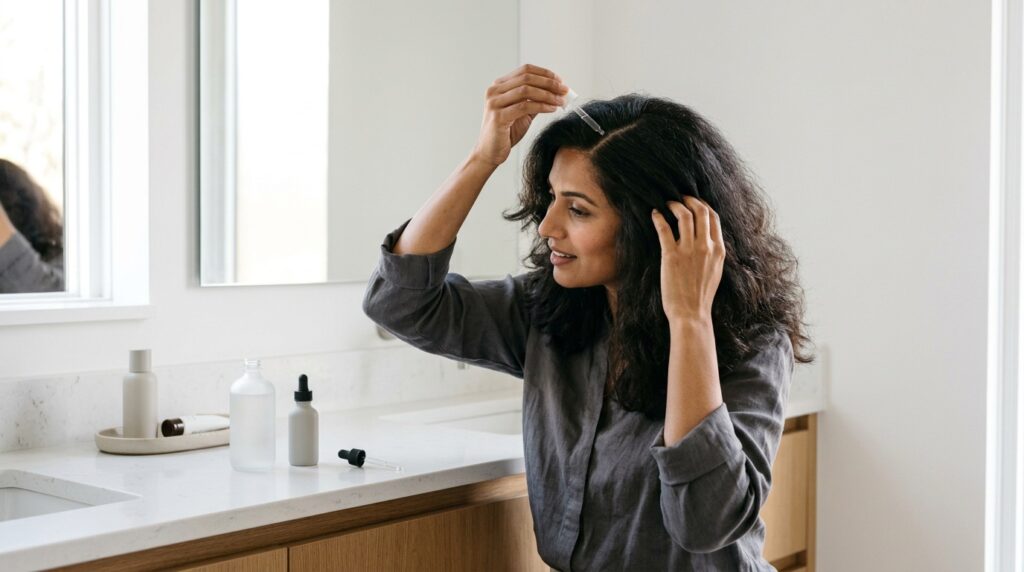
- Section the hair. Avoid just pouring serum onto your head. Divide your hair into sections and apply serum directly to the scalp, not the hair lengths.
- Massage properly. Use your finger pads, not your nails. Spend two to three minutes applying with small circular movements. This step enhances the microcirculation benefits targeted by scalp treatments.
- Leave it on. Scalp serums in this category are generally intended to be leave-in or require time as per product directions. Rinse only if instructed.
- Be consistent. Improving scalp health takes time. Use the product for at least eight to twelve weeks before assessing results.
Practical advice for India’s warmer months: if you sweat a lot at the scalp during summer or monsoon, the serum might feel heavy or seep into your hair. In that case, apply it at night instead of the morning, and reduce usage to twice or thrice a week rather than daily.
Honest Assessment: Do These Serums Work?
The straightforward answer is: for the right individuals, they can deliver results, within certain limits.
Anti-ageing scalp serums are not instant solutions and don’t match the results of clinical treatments like PRP or prescription topicals. Instead, a well-formulated scalp serum can improve the overall scalp environment over time, fostering a healthier place for hair growth. Users often see better scalp texture, less dryness, and hair that feels fuller with consistent use. These outcomes, while not dramatic, are valid.
Kérastase is trusted in professional haircare, and their formulas are taken seriously by both trichologists and stylists. This doesn’t mean every product is perfect for everyone, but it signifies that the launch is substantial, not superficial.
The notable downside is the price. For many in India, it’s at the top of what’s reasonable for a scalp product. If cost is a concern, consider using it strategically: try an in-salon Longevity treatment once a month combined with more affordable at-home care for a balanced approach between results and cost.
For Salon Professionals
If you’re considering adding a scalp longevity treatment to your offerings, here’s a sensible approach.
Consultation First
Don’t position this as a simple add-on. A thorough trichoscopic or visual scalp assessment before recommending Longevity serums distinguishes a professional recommendation from a sales pitch. Inquire about the client’s family history of thinning, stress levels, dietary changes, and recent health shifts. If you notice signs of androgenetic alopecia, alopecia areata, or significant scalp inflammation, refer the client to a dermatologist before suggesting cosmetic treatments. Your credibility hinges on knowing when a product isn’t the optimal first step.
Building the Service
A scalp longevity service is best structured as a ritual rather than a quick addition between colour and blowout. It should be a standalone or semi-standalone service: starting with a clarifying or chelating cleanse (especially vital in hard-water areas), followed by a scalp analysis, serum application with a structured massage protocol of at least five minutes, and a brief session with a scalp steamer or heat cap if available. The heat aids absorption and gives the service a premium touch that justifies its cost.
Frequency and Aftercare
Recommending monthly in-salon treatments alongside twice-weekly at-home serum usage is a practical structure for most clients. Set clear expectations during consultation. Provide precise home-use instructions, including sectioning and massage techniques. Clients who achieve results at home are more likely to return for salon services.
Retail Angle
Retail sales for this range are strong because its logic is easy to convey. Use the skin-scalp analogy: if you use face serum, why not the same care for your scalp? Avoid overstating claims. Don’t promise hair regrowth or that it will “stop” hair loss. Present it honestly as scalp health maintenance and preventive care. This approach builds client trust, drives retail sales, and keeps away from difficult discussions when results take time.
FAQs
Can I use a Kérastase scalp serum if I have dandruff?
It depends on the type of dandruff. Mild, dry-flake dandruff differs from fungal or seborrhoeic forms. For anything more than slight flaking, first get the dandruff treated with suitable medicated shampoo or dermatologist guidance, then consider adding a scalp serum once the situation stabilises.
Is an anti-ageing scalp serum useful in your twenties or thirties?
Preventive scalp care is sensible from your late twenties onwards, especially given the Indian factors like hard water, pollution, and heat. There’s no need to wait for visible thinning. At this point, a basic scalp oil or lightweight tonic might suffice, while a premium serum becomes financially sensible when you have the essentials covered.
Where can I buy Kérastase in India and how much does it cost?
Kérastase is available through authorised salons, select premium retailers, and the brand’s official Indian channels. Prices vary widely based on product format, city, and whether you’re buying retail or as part of a salon service. Generally, professional scalp serums in this range are priced at the higher end of the premium market. Always purchase from authorised sources to ensure product authenticity.