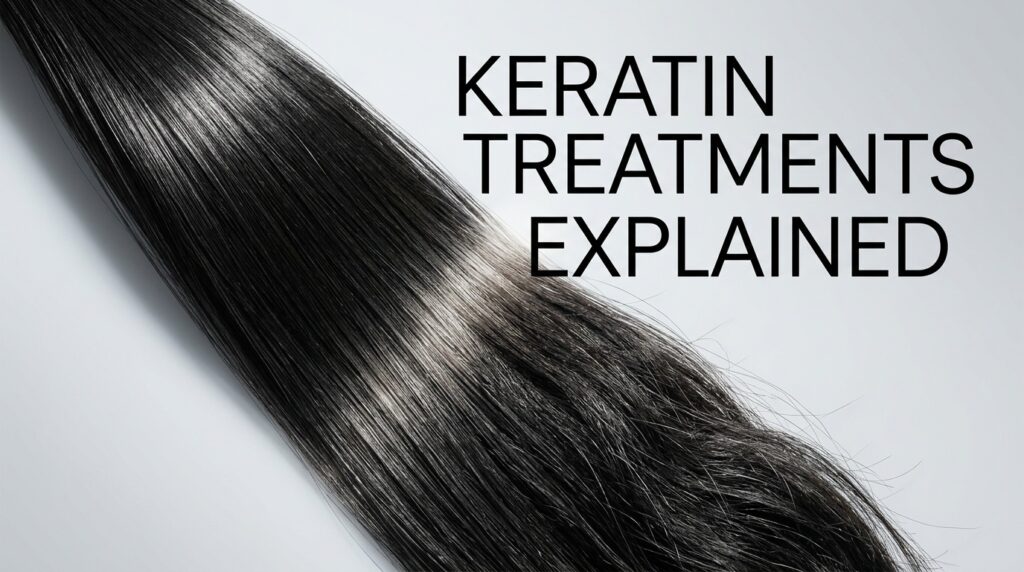
Keratin treatments have been a popular choice in Indian salons for many years, yet confusion seems to persist. People often wonder if they are harmful, merely a fancy blow-dry, or if they damage hair colour. Given the mixed opinions out there, it’s understandable. Keratin isn’t a singular treatment but a whole category, with outcomes that vary based on the product, technique, and hair characteristics. Let’s clear up the confusion.
What Is Keratin, Actually?
Keratin is the structural protein that constitutes your hair. Over time, factors like chemical treatments, heat styling, pollution, hard water, and even the Indian sun can degrade this protein, making hair rough and frizzy. A keratin treatment works by infusing a protein-rich formula into the hair shaft, creating a smooth coating on the cuticle. Heat, usually from a flat iron, is then used to seal the formula into the hair.
Smoother, shinier, and more manageable hair is the result. For Indian hair grappling with humidity, monsoon frizz, and hard water damage, this can be quite appealing. However, there are some extra nuances to consider.
The Real Benefits
- Frizz control: Especially in high-humidity areas like Mumbai or Chennai, a quality keratin treatment can significantly reduce frizz and decrease blow-dry time.
- Smoother texture: Hair becomes softer and glossier, with coarser, drier hair often benefiting most.
- Reduced styling time: Many find their styling routine becomes quicker, reducing heat damage over time.
- Improved manageability for chemically processed hair: Hair frequently coloured can become porous and hard to manage, and a keratin treatment can temporarily address this.
- Longevity: Results can last from six weeks to five months, depending on the formula and care.
The Risks and the “Skip It If” List
Now for the reality check. Not all keratin treatments are the same, and some do come with concerns.
Formaldehyde and releasing agents. The main controversy is formaldehyde. Some older or cheaper products emit formaldehyde gas during heating, which can irritate and poses health risks over prolonged exposure. Many brands now offer formaldehyde-free or low-release products, but these claims don’t always mean zero formaldehyde-releasing compounds. So, the product and brand choice is crucial.
Heat damage: This treatment involves high temperatures via a flat iron. On hair that’s bleached, over-processed, or fine, this could lead to breakage. A competent stylist will assess your hair first. If they don’t, that’s a sign to be cautious.
Scalp sensitivity: Some people may experience scalp irritation or tingling, especially if the product touches the scalp.
Colour change: Keratin treatments may slightly alter hair colour, particularly affecting warm or red shades. It’s important to discuss timing with your stylist if you’ve recently coloured your hair.
Skip it if:
- Your hair is heavily bleached or compromised. The heat can cause severe breakage.
- You have a sensitive scalp or chemical sensitivities. Always perform a patch test.
- You expect permanent results. These treatments are temporary and wash out gradually.
- Your stylist can’t provide the product name or its formaldehyde status. This information is essential.
Formaldehyde-Free Options: Are They Worth It?
Yes, with realistic expectations. Formaldehyde-free treatments may not be as long-lasting or dramatic as traditional ones but are viable for those with sensitivities or salons offering cleaner options. The smoothing effect is evident, especially on frizzy hair, but it results in more “manageable and glossy” hair rather than “pin-straight.”
Product Quality Makes All the Difference
This is key in keratin treatments. A professional product in an expert salon vastly differs from a budget option. Products in India range widely, from imported salon brands to local variants. Brands like Schwarzkopf Professional and Matrix are well-integrated into the Indian market, offering effective keratin systems. Kérastase focuses more on deep nourishment and smoothing, aligning more with intensive conditioning than a standard keratin treatment.
This isn’t a hierarchy but an insight. Always inquire about the product your salon uses. If they say “keratin wala” without specifics, push for more details.
At-Home Keratin Treatments: Worth Trying?
Home keratin masks and treatments are generally safe, using mild concentrations without the heat sealing of salon treatments. They won’t mimic salon results but can enhance softness and manageability. Think of them as conditioning, rather than a full keratin treatment. Set realistic expectations, and you won’t be let down.
Seek products with hydrolysed keratin in the ingredients and use them weekly or fortnightly. Daily use can make fine hair brittle, so moderation is key.
Aftercare: How to Make Results Last
- Refrain from washing your hair and don’t tie, clip, or tuck it for 48-72 hours post-treatment.
- Opt for sulphate-free shampoo, as sulphates can strip the treatment away faster.
- Avoid chlorine, as it’s detrimental to keratin-treated hair.
- In areas with hard water, like much of North India, Bangalore, or parts of Mumbai, consider a shower filter to reduce mineral buildup that counters your treatment.
- Coloured hair should use a colour-safe, sulphate-free regimen to protect the treatment and colour.
For Salon Professionals
Consultation Is Everything
Before scheduling a keratin treatment, a thorough hair history review is essential. Inquire about any bleach, previous chemical services, medications, and scalp conditions. Conduct strand tests on fine, coloured, or weakened hair. Ignoring this step often results in negative reviews and, more importantly, dissatisfied clients experiencing hair breakage.
Be frank about formaldehyde content. If your product contains formaldehyde or releasing agents, ensure proper ventilation and inform clients. Consider installing an extraction fan or working near an open window routinely.
Technique Tips
- Section thinly for even heat distribution and penetration. Rushing this can lead to uneven results and dissatisfied clients.
- Adjust flat iron temperatures according to hair type. High heat isn’t faster for fine or coloured hair, just riskier.
- Avoid touching the scalp with the product, particularly for sensitive clients. Most formulas are intended for mid-lengths and ends.
- If trying a new product or brand, test on a hair swatch or trusted client before offering it widely.
Building It Into Your Service Menu
Create a tiered menu: offer full treatments for maximum smoothing, lighter glossing for manageable hair without a huge commitment, and recommend at-home maintenance products. This helps cater to various client budgets and fosters loyalty.
Seamlessly integrate retail by advising sulpahte-free shampoos and conditioners when providing the service. Explain their importance in preserving the treatment, serving both advice and revenue generation. Schwarzkopf Professional and Matrix have sulphate-free options that complement their smoothing services well and are accessible in the Indian market.
Managing Client Expectations
Set realistic expectations during consultations. Clients with very curly or coarse hair won’t leave with perfectly straight hair unless a strong formula is used, and even then, it’s temporary. Slightly under-promise, let the results impress, and you’ll gain loyal clients. Over-promising leads to complaints even if the treatment performs well.
Discuss potential colour changes upfront. If a client has warm-toned or copper hair, inform them that keratin treatment might alter the tone. For a colour refresh, it’s best to schedule it after the keratin treatment has set, typically about two weeks later, not before.
FAQs
How long does a keratin treatment last on Indian hair?
Results generally last two to five months, with Indian hair exposed to high humidity, hard water, and frequent washing tending toward the shorter end. Using sulphate-free shampoo and avoiding chlorine can significantly extend the results.
Can I do a keratin treatment if my hair is coloured?
Yes, but timing is key. Ideally, allow at least two weeks after colouring before undergoing keratin treatment, as there may be a shift in tone or warmth. If planning both, start with the colour first, let it stabilize, then proceed to keratin. Discuss this with your stylist before making appointments for these services.
Is keratin treatment safe for regular use, or should I avoid it?
When conducted occasionally by a professional using reputable products in a well-ventilated area, it’s typically safe. Most people have the treatment once or twice a year. More frequent applications, especially on processed hair, unnecessarily increase exposure to heat and chemicals. If you have sensitive skin or past reactions to similar treatments, consult a dermatologist before proceeding.