If you’ve spent any time in a salon chair or scrolling through haircare content, you’ve heard the word “bond repair” thrown around constantly. Olaplex, in particular, has built its entire identity around the idea that it reconnects broken disulfide bonds in your hair. But does the chemistry actually hold up? A detailed analysis of published cosmetic science research raises some genuinely interesting questions, and the honest answer is more nuanced than the marketing suggests.
First, What Are Disulfide Bonds and Why Do They Matter?
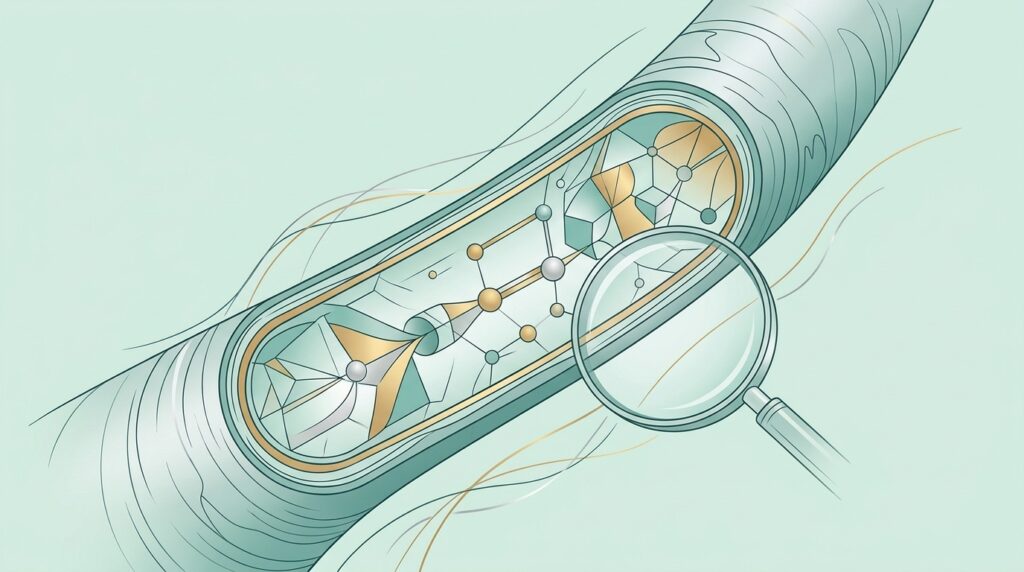
Your hair’s strength and structure come largely from keratin, a protein held together by different types of chemical bonds. Disulfide bonds are covalent bonds, meaning they’re among the strongest connections that exist within the hair shaft. They link two sulfur-containing amino acids (cysteines) together, giving hair its resilience, elasticity and curl pattern.
When you bleach, colour, chemically straighten or repeatedly heat-style your hair, these bonds break. The result is what we all recognise: hair that feels mushy when wet, snaps easily, loses its natural texture or becomes permanently porous. Indian hair, which tends to be thicker in diameter but can be structurally weakened by hard water, high humidity and frequent chemical services, is particularly vulnerable to this kind of cumulative damage.
What Olaplex’s Active Ingredient Actually Does
Olaplex’s patented active is bis-aminopropyl diglycol dimaleate. The claim is that this small molecule works by finding broken disulfide bond “ends” (technically, free thiol groups or maleimide-reactive sites) and linking them back together, or at least creating new crosslinks within the hair’s internal structure.
This is not a conditioning trick. It’s not silicones filling in gaps or protein temporarily patching the surface. The mechanism is genuinely different from a standard deep conditioner, and that distinction matters when you’re deciding whether a product is worth its price point.
However, here’s where the science gets interesting and a little humbling. Research reviewed by cosmetic chemists, including the analysis that Lab Muffin Beauty Science examined from the journal Cosmetics, suggests that while Olaplex does appear to create measurable bond-forming activity in lab conditions, the extent to which it fully “repairs” broken disulfide bonds in already-processed hair, versus forming new maleamide crosslinks, is still debated. The hair isn’t necessarily being returned to its pre-damage state. Think of it less like welding a broken pipe and more like adding internal scaffolding that improves strength and reduces further breakage.
That distinction matters for setting realistic expectations, especially for clients who have been sold the idea that Olaplex will reverse years of bleach damage in three applications.
What the Research Actually Shows (In Plain Language)
Studies using techniques like tensile strength testing and mass spectrometry have shown that hair treated with Olaplex-type chemistry does demonstrate improved mechanical properties. Hair breaks less easily. It shows better elasticity. Colour results on bleached hair treated with Olaplex tend to be more even because the hair structure is less compromised during the lightening process.
Where the science is less definitive is in proving a clean, direct “broken bond in, repaired bond out” equation. The crosslinks formed may not be identical to the original disulfide bonds. They appear to be functional and beneficial, but calling them a perfect repair overstates what’s happening at a molecular level.
Does that make Olaplex ineffective? No. It makes it a genuinely useful treatment with real, measurable benefits for damaged or chemically processed hair. It just isn’t magic, and no single product is.
Who Should Use Olaplex and How
Olaplex has several steps designed for different stages of a hair service or home routine. The most relevant ones for home users in India are No.3 (Hair Perfector, a pre-shampoo treatment), No.4 (Bond Maintenance Shampoo), No.5 (Bond Maintenance Conditioner), No.6 (Bond Smoother, a leave-in cream) and No.7 (Bonding Oil).
Who Will Genuinely Benefit
- Anyone who bleaches or highlights their hair regularly, especially those going lighter than their natural shade
- People who use chemical straightening, relaxers or keratin treatments frequently
- Those whose hair has become visibly porous, breaks mid-shaft or feels gummy when wet
- Colour-treated hair that is exposed to hard water, which is extremely common across cities like Delhi, Bangalore and Mumbai, and accelerates further structural stress
Who Can Skip It or Use Alternatives
- If your hair is in genuinely healthy condition with no chemical processing, a good protein treatment or moisture-focused conditioner will serve you just as well at a lower price point
- If you are dealing primarily with scalp issues, dryness at the roots or hair fall, Olaplex targets hair fibre structure and is not a scalp treatment. See a trichologist for those concerns
- Budget-conscious clients should know that other bond-building brands have entered the market. Some have published their own supporting data; others have not. Research before you switch purely on price
How to Use Olaplex No.3 at Home
- Apply generously to damp, towel-dried hair from mid-lengths to ends. Use enough to feel saturated, not just coated
- Leave on for a minimum of 10 minutes. For significantly damaged hair, 30 to 90 minutes gives better results. Some stylists recommend wrapping hair in a shower cap to maintain warmth, which can help in cooler, air-conditioned environments
- Rinse thoroughly, then shampoo and condition as normal
- Use once a week during an active repair phase, then drop to every two weeks for maintenance
One honest note: No.3 is a leave-on treatment rinsed before shampooing, which means its contact time with the hair shaft is limited compared to in-salon steps (No.1 and No.2) applied during the colour or bleach process itself. Home maintenance supports the work done in the salon; it doesn’t fully replicate it.
A Word on Indian Hair and Climate Conditions
Indian hair is structurally diverse, ranging from straight and fine in some northern regions to dense, coarser textures in the south, with wavy and curly patterns across many communities. What most Indian hair shares is exposure to hard water, high humidity and heat, all of which compound chemical damage over time.
If you’re in a city with notoriously hard water, investing in a shower filter alongside your bond-building treatments genuinely helps. The mineral buildup from hard water creates a physical barrier that prevents any treatment, including Olaplex, from penetrating effectively. It’s worth considering before you invest significantly in a product regimen.
Monsoon humidity is another factor. Properly bonded and structured hair actually handles humidity better because it’s less porous. So using bond repair treatments consistently during dry winter months can make a noticeable difference to how hair behaves when the humidity climbs in June and July.
For Salon Professionals
Consultation: Setting Realistic Client Expectations
The single most important thing you can do is have an honest pre-service conversation. Many clients walk in expecting Olaplex to reverse severe bleach damage from years of poor-quality lightening services. Explain that Olaplex and similar bond builders are most effective when used during the chemical service, not after cumulative damage has already fragmented the hair structure significantly. No.1 and No.2 used in-service are where the real structural work happens; retail home-care supports it over time.
For clients with heavily damaged, over-processed or colour-compromised hair, consider a strand test before any further chemical service, regardless of whether you’re using a bond builder. Bond builders reduce damage; they do not make hair indestructible.
Technique Tips for In-Salon Use
- When adding No.1 to a bleach mix, follow the brand’s recommended ratios carefully. Over-diluting reduces efficacy; the chemistry only works at adequate concentration
- No.2 should be applied and left for the full recommended time before rinsing. In a busy salon environment, this step is often rushed. It matters. Build it into your service timing
- For toning and colour services on Olaplex-treated hair, note that the hair’s improved porosity consistency can affect how toners deposit. Adjust your development times accordingly and do a strand test when working on a new client
Aftercare Advice to Give Clients
- Recommend the complete home-care system rather than cherry-picking one product. The shampoo and conditioner are formulated to be compatible with the bond structure created in the treatment
- Advise clients in hard-water cities to use a chelating shampoo once a month before their Olaplex No.3 session at home
- Set a realistic maintenance timeline: weekly No.3 for four to six weeks post-service, then fortnightly thereafter
Service Menu and Retail Positioning
Consider offering Olaplex as a tiered add-on rather than a blanket inclusion. A “Bond Maintenance” add-on for standard colour services and a “Intensive Bond Repair” package for bleach, highlights or global lightening gives clients choice and communicates value at different price points. Olaplex retail products, where genuine and authorised stock is available, are a natural retail conversation after an in-salon service. Clients who’ve seen and felt the result are far more likely to invest in the home system. Broad retail pricing for the home range sits somewhere in the mid-to-upper range for professional haircare in India; specific prices vary significantly by city and retailer, so check your authorised distributor.
FAQs
Is Olaplex safe to use on oiled or hennaed Indian hair?
Olaplex is generally compatible with most hair types, but applying it over a heavy oil coating reduces penetration significantly. Always apply to clean, damp hair. For hair that has had henna applied, the interaction depends on whether pure henna or a compound henna with metallic salts was used. Metallic salts can cause unpredictable reactions with chemical treatments. If your client or you regularly use compound henna, avoid applying any chemical service, including bleach over Olaplex, until you have done a thorough strand and sensitivity test.
Can Olaplex replace a protein treatment for damaged hair?
They work differently. Olaplex targets internal bond crosslinks within the hair’s keratin structure. Protein treatments work by depositing hydrolysed proteins onto and into the hair shaft to temporarily fill gaps. Both can be beneficial, but they are not interchangeable. Very porous or severely damaged hair often benefits from both approaches used alternately, not simultaneously. Stacking too many actives at once can cause stiffness or buildup, so space them out and monitor how your hair responds.
How often should I use Olaplex No.3 if I get highlights every 6 to 8 weeks?
For regularly highlighted hair, using No.3 once a week in the two weeks immediately following your salon appointment, then dropping to once every two weeks as maintenance, is a practical rhythm. If you notice your hair feeling dry, brittle or snapping more than usual between appointments, increase frequency temporarily and book a consultation with your stylist to assess whether your highlight formula or application timing needs adjusting.