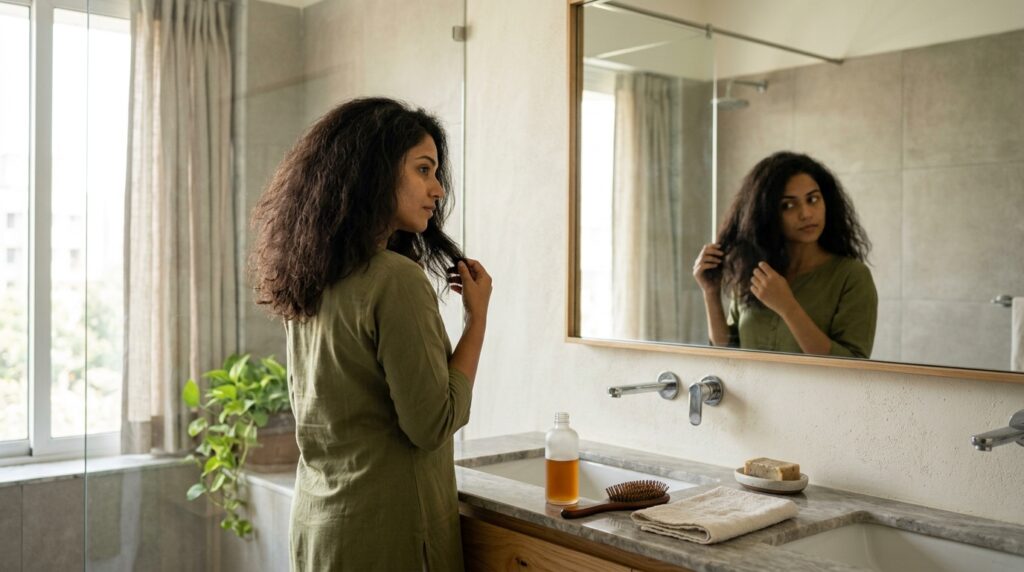
If your hair feels perpetually dry, breaks easily or puffs up the moment you step outside, you are not imagining it. Indian weather, hard water, pollution and repeated heat styling create a particularly brutal combination for hair health. The good news is that professional salon treatments have come a long way, and with the right one, the difference can be genuinely dramatic.
Why Indian Hair Tends to Need Extra Help
Most Indian hair is naturally thick and has a moderate-to-high porosity once it has been chemically treated or heat-styled regularly. Add hard water mineral buildup, high humidity in coastal cities and the drying effect of Delhi or Rajasthan summers, and you have a recipe for chronic dryness and frizz. A single good haircut or a quick oil massage will not undo months of structural damage. That is where professional bonding and conditioning treatments come in.
Understanding What “Damage” Actually Means
Hair damage happens at two levels. Surface damage is when the outer cuticle is roughened or lifted, causing frizz, dullness and tangles. Most conditioning and smoothing treatments address this layer. Internal damage is when the cortex, the structural core of the strand, loses its disulphide bonds, usually from bleach, strong relaxers or repeated high-heat processing. This is what makes hair feel mushy when wet, snap easily and lose its elasticity. Knowing which kind of damage you have helps you and your stylist choose the right treatment.
Bond-Building Treatments: Olaplex and How It Works
Olaplex is probably the most talked-about hair treatment in salons right now, and for good reason. The range works by finding and relinking broken disulphide bonds inside the hair shaft, not just coating the outside. This is why people who have been using it consistently, like the reader whose story inspired this post, describe their hair feeling softer and stronger over time rather than just temporarily shinier.
At the salon, you would typically get Olaplex No.1 Bond Multiplier and No.2 Bond Perfector applied as a treatment or added to a colour or bleach service. No.1 is a concentrated professional formula, while No.2 is left on for longer to continue the bonding process. Between salon visits, Olaplex No.3 Hair Perfector is the at-home treatment you apply before shampooing, roughly once a week. It is technically a bond maintenance treatment rather than a deep conditioner, but used consistently it makes a noticeable difference.
Who it suits: Anyone with chemically treated, bleached, heat-damaged or very brittle hair. It works across hair types and textures.
Skip it if: Your hair is in good condition and you are just after shine or softness. A deep conditioning mask will give faster results for surface dryness at a lower cost. Also, if your budget is tight, prioritise the in-salon No.1 and No.2 treatment over buying every product in the home range at once.
Deep Conditioning and Moisture Treatments
Not every dry hair problem needs bond repair. If your hair is frizzy and dull but has not been heavily chemically processed, a professional deep conditioning treatment could be all you need. These use high-concentration emollients, proteins and humectants that penetrate better than any home mask because they are applied with heat, often under a steamer.
Kérastase Nutritive is a range designed for dry hair. The in-salon Fusio-Dose treatment within the Kérastase system allows your stylist to mix a serum concentrate with a conditioning base tailored to your specific dryness level. It is a genuinely customisable experience and the results last several weeks with the right aftercare at home.
Moroccanoil treatments are another popular option at Indian salons. The brand’s argan oil-based treatments are excellent for surface smoothing, frizz control and adding that lived-in softness. They work beautifully on coarse, dry Indian hair textures and the results are visible immediately after the first session.
For a more accessible but still professional option, Schwarzkopf Professional‘s BC Bonacure range offers targeted treatments for different damage levels. Many salon chains in India stock this range and it offers reliable results at a slightly gentler price point than some other professional brands.
Keratin Smoothing Treatments: What You Should Know
Keratin treatments are extremely popular in India for a reason. They coat the hair shaft with a keratin-protein formula that dramatically reduces frizz, cuts blow-dry time and gives a smoother finish that lasts two to four months depending on your hair type and how you maintain it.
However, be clear-eyed about what you are getting. Many keratin treatments contain formaldehyde or formaldehyde-releasing chemicals. These are effective but do carry health concerns with repeated exposure, particularly in a poorly ventilated space. A reputable salon should use a ventilated area and offer formaldehyde-free alternatives. Always ask what formula they are using before you commit.
Safety note: If you have a sensitive scalp or skin conditions, do a patch test at least 48 hours before any chemical service. Keratin treatments are a chemical service and should be treated with the same caution as a colour or relaxer. If you are on any ongoing medication or have a skin or scalp condition, check with your doctor before proceeding.
Skip it if: Your hair is very short, very fine, or you have had a recent chemical relaxer. Combining services without a gap can cause serious breakage.
Scalp Treatments: The Step Most People Skip
Chronically dry hair often starts at the scalp. Hard water deposits, product buildup and a dry or imbalanced scalp environment can all slow down healthy hair growth and make your strands rough from the root. A professional scalp treatment, often done with a clarifying rinse followed by a targeted serum, can reset things significantly. Many Kérastase salons in India offer Initialiste or Specifique scalp services that work on this level. Ask your stylist to assess your scalp before recommending a treatment, not just your ends.
Building a Treatment Plan That Actually Works
One salon session rarely fixes months of damage. Think of it like skincare. A single facial does not transform your skin permanently. What works is a consistent plan.
- In-salon treatment: Every four to six weeks, depending on damage level and budget.
- At-home maintenance: Use the matching retail range your stylist recommends, whether that is Olaplex No.3 weekly, a Kérastase Nutritive masque twice a week, or a Moroccanoil conditioning mask. These are not upsells for the sake of it. The home products genuinely extend and protect the salon work.
- Water filter: If you are in a hard water city, a shower filter makes a real difference. This is not a brand recommendation, just practical advice that many stylists quietly swear by.
- Heat protection: Every single time you blow dry or use a straightener. No exceptions.
For Salon Professionals
Here is what makes the difference between a client who returns every month and one who tries a treatment once and does not come back.
Consultation First, Always
Do a proper consultation before every treatment, not just the first one. Ask about recent chemical services, water type at home, heat styling frequency and what products they are using. An Olaplex No.1 applied on top of a fresh relaxer without a sufficient gap is a liability. A quick intake form or even a verbal checklist protects your client and your reputation.
Damage Assessment Technique
The wet stretch test is your friend. Wet a single strand and stretch it gently. Healthy hair stretches slightly and snaps back. Damaged hair stretches further and either stays stretched or breaks with no resistance. This tells you quickly whether you are dealing with moisture deficiency, protein deficiency or structural bond damage, each of which calls for a different treatment approach.
Layering Services Without Overloading
Olaplex added to a colour or bleach service is excellent practice and protects the hair during chemical processing. However, stacking a keratin treatment immediately after a bond treatment in the same session is too much. Space these out by at least two weeks. Overloaded hair that feels temporarily great in the salon can start shedding or breaking within days at home, and that client will not come back.
Retail as Aftercare, Not Upselling
Recommending a take-home product is part of the service, not a sales pitch, if you frame it correctly. After a Kérastase in-salon Fusio-Dose, explaining that the Nutritive masque at home extends the result by two extra weeks is genuinely helpful information. Stock the key home-use items from whichever professional brands you carry: the Olaplex No.3, a Moroccanoil treatment mask, the relevant Kérastase home range. Clients who buy retail have longer-lasting results and come back more satisfied.
Service Menu Tip
Consider offering a tiered menu: a basic deep conditioning service, a mid-tier bond repair service and a premium combined service that includes scalp treatment, bond repair and a blow-finish. This gives clients a clear upgrade path and helps you increase average ticket size without pressuring anyone. Price these in a clear INR range that reflects your city and salon tier, and be transparent that prices vary based on hair length and thickness.
FAQs
Can I do Olaplex No.3 every week at home, or is too much protein bad for hair?
Olaplex No.3 is not a protein treatment. It works on disulphide bonds rather than depositing protein onto the hair. This means weekly use is generally fine and does not cause the stiffness or brittleness that protein overload can. That said, always monitor how your hair responds and scale back if it starts feeling stiff or dry.
How long does a salon deep conditioning treatment last, and how do I maintain it?
Most professional deep conditioning treatments last two to four weeks, depending on how often you wash your hair, your water quality and whether you use a heat protectant. Washing with sulphate-free shampoo and using the recommended at-home mask twice a week will significantly extend the results between salon visits.
Is keratin treatment safe for coloured or bleached hair in India?
It can be done on coloured or bleached hair, but timing matters. Most stylists recommend waiting at least two weeks after a colour service before a keratin treatment. Bleached hair that is already highly porous is more vulnerable to the heat used during a keratin service. Have an honest conversation with your stylist about your hair’s current condition before booking. A patch test and a strand test beforehand are strongly advisable.