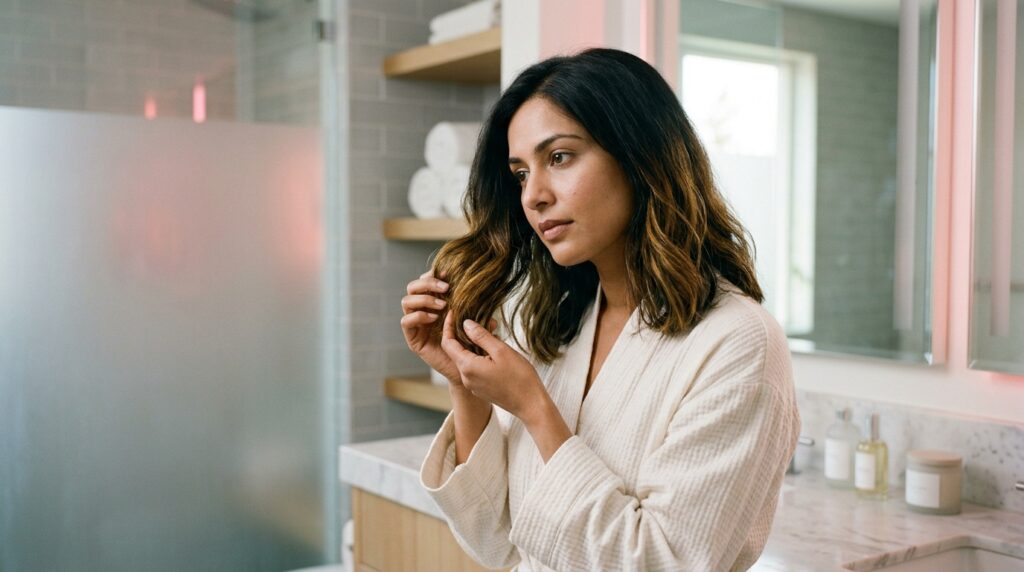
We have all been there. You lift a client beautifully, apply what feels like the right toner, and then the processing time ends and you are staring at something that looks more golden retriever than icy blonde. If you recently used Matrix 8G on a level 9 lift and ended up with a brassy, warm result, you are not alone, and more importantly, this is fixable. Let’s break down exactly what went wrong and how to correct it properly.
Why Did 8G Make the Hair Brassy?
This is the core of the problem, and understanding it will prevent you from repeating it. The Matrix 8G is a golden blonde shade. The “G” stands for gold, which means you actively deposited warm, yellow-gold pigment onto hair that was already showing warm undertones from the lift.
When you lift hair to a level 9, the underlying pigment revealed is typically a pale yellow to yellow. Instead of neutralising that warmth, an 8G shade intensified it. You were essentially adding gold on top of gold. The toner did exactly what it was formulated to do. The formula selection was the issue, not the application or timing.
This is one of the most common consultation slip-ups in the salon: confusing a toner’s job (neutralise or refine) with its actual pigment base. A golden shade is always going to push warm, regardless of its level.
Step One: Assess the Hair Before You Touch It Again
Before you mix anything, do an honest assessment. Put your hands through it. Is the hair compromised from the lift? Does it feel gummy, stretchy or brittle? If yes, correction needs to wait. You cannot safely process damaged hair again, and trying to will cause breakage that no colour correction can fix.
- Elasticity test: Wet a small section and gently stretch it. Healthy hair springs back. If it stretches and stays extended or snaps, stop and focus on repair first.
- Porosity check: High porosity hair, common in Indian clients exposed to hard water and heat styling, grabs colour unevenly. It will deepen the brassiness at the ends.
- Tone assessment: Is the brassiness uniform or patchy? Patchy warmth may indicate uneven lift, which is a separate problem requiring a different approach.
If the hair is in good condition, you can proceed with correction at the same appointment after a short break. If not, send the client home with a reconstructing treatment, book a follow-up, and be honest with her about why.
Choosing the Right Corrective Toner Formula
To cancel brassiness, you need to work with colour theory. Pale yellow and gold tones sit on the warm side of the wheel. Their neutralisers are violet (cancels yellow) and blue-violet or ash (cancels orange-gold).
Since the hair is at a level 9 with golden warmth, you are looking at a yellow-gold base to neutralise.
Recommended Corrective Directions
- A violet-based ash toner at level 9 or 10: Look at shades like Matrix SoColor 10V, 9V or 9A within their toner or shade range, depending on how light the base is and how much depth you want. Violet counteracts yellow most directly at this level.
- Wella Professionals /Color Touch 9/16 or 10/81: These are pearl and ash-based formulas that work well on pale yellow bases and give a cooler, more natural finish without going full silver. Color Touch is demi-permanent, which is kinder for already-processed hair.
- Schwarzkopf Professional Igora Royal 9.5-1 or 9-1: The -1 suffix in Igora’s system is ash (blue-green), which is excellent at cutting gold tones. Mixing with a clear or 0-00 to dilute intensity is often wise at this level.
A word of caution: do not over-tone. If you leave a strong violet or ash toner on too long on porous hair, you will end up with grey or lilac results. Use a lower volume developer, 10 vol or even 6 vol with a demi, and watch the timing carefully. Do a strand test first, always.
A Simple Corrective Formula Starting Point
For a client lifted to level 9 with golden brassiness, a reasonable starting point is a demi-permanent toner mixing 9A or 9V with a small amount of clear (roughly 50/50 or 70/30 colour to clear depending on porosity), processed at 10 vol for 15 to 20 minutes with heat, or 20 to 25 minutes without. Check every 5 minutes once you are past the halfway mark. This is a guideline, not a fixed rule. Adjust for your client’s specific hair.
Application Tips for Even Results
Brassy corrections are unforgiving about sloppy application. Indian hair, especially in humid climates, can have varying porosity from root to end due to years of oil treatments, chemical services and hard water exposure. Keep this in mind.
- Apply on damp, not dripping wet hair. Excess water dilutes the toner further and affects processing.
- Work in small, thin sections. Thick sections lead to uneven saturation, which means uneven tone.
- Apply mid-lengths and ends first if they are more porous, to allow more processing time. Add roots last since they process fastest due to body heat.
- Use a bowl and brush, not a bottle. Precision matters in a correction appointment.
- Keep your hands moving. Sitting toner is not evenly processing toner.
Aftercare Instructions for the Client
Once you have corrected the tone, the conversation about maintenance is just as important as the service itself. Be direct with your client. Tell her that corrected colour, especially on lighter shades, needs specific upkeep to stay that way.
- Use a sulphate-free, colour-safe shampoo. Hard water is a real problem in most Indian cities and strips tone faster. If she is in a city with high TDS water, a chelating or clarifying wash once a month before toning at home is worth suggesting.
- A violet or blue toning shampoo used once or twice a week will help maintain coolness between salon visits. Products in this category are widely available from professional brands, but advise her to use it sparingly and not as her daily shampoo, or she risks over-toning at home.
- Heat protectant is non-negotiable for colour-treated hair. Indian summers and humidity push clients toward heavy heat styling, which fades tone faster than almost anything else.
- Sun exposure also fades cool tones quickly. A UV-protective hair product or simply covering the hair when outdoors in peak sun hours makes a genuine difference.
How to Prevent This in Future Consultations
Honestly, the correction is the easy part. The harder habit to build is slowing down during consultation and formula selection. A few practical shifts:
- Always identify the underlying pigment at the target level, not just the level itself. Level 9 is almost always yellow. Plan the toner for that yellow, not for the client’s current colour.
- Read shade names, not just numbers. G is gold. A is ash. V is violet. N or NA is natural. If you want to neutralise, avoid warm suffixes on toners.
- Do a strand test when trying a new formula on a loyal client. It takes 20 minutes and saves hours of correction time.
- Write your formulas down. Building a client card system, even a simple digital note, means you are not guessing at the next appointment.
Do not be too hard on yourself. Every working colourist has a correction story. What matters is that you are asking the right questions now.
For Salon Professionals
A few additional points specifically for you as a practitioner and business owner.
Handling the Client Conversation
When you make a technical error, own it calmly and clearly. Clients respect honesty far more than they respect deflection. Explain what happened in simple terms: “The toner I chose added warmth instead of reducing it. I am going to fix this for you today at no extra charge.” Transparency protects trust, and trust is what keeps a loyal client in your chair for years.
Documenting the Correction
Record every formula used, including the error and the corrective formula, on the client card. Note developer volume, timing, result and how the hair felt at each stage. This documentation is your protection if there is a dispute, and it is your reference for keeping results consistent going forward.
Retail Opportunity Post-Correction
A correction appointment is a genuine opportunity to retail maintenance products, not in a pushy way, but because the client now clearly understands why home care matters. A toning shampoo and a good bond-strengthening or protein treatment are sensible recommendations after any corrective colour work. Frame it as part of the plan to keep her results stable, because it genuinely is.
Service Menu Considerations
If colour corrections are becoming more frequent in your salon, consider building a formal consultation step into every colour booking. A 10-minute paid or complimentary pre-colour consultation with a strand test can reduce errors significantly and signals to clients that your salon takes precision seriously. It also gives you grounds to charge appropriately for complex colour work rather than absorbing correction costs every time.
Patch and Strand Testing
For any chemical colour service, a patch test 48 hours before the appointment and a strand test before full application are standard professional practice. This is especially important for clients with a history of scalp sensitivity or previous allergic reactions. Never skip these steps, even with loyal, long-term clients. Hair condition changes over time, and so can skin sensitivity.
FAQs
Why did my hair look golden and brassy after toning?
If the toner used contained a warm or golden base (indicated by “G” or “W” in the shade name), it likely added warmth rather than neutralising it. Toners need to contain cool or neutral pigments to cancel brassiness. A golden toner on a pale yellow base will always intensify the warmth.
How soon can I re-tone my hair after a bad toner result in India?
If your hair is in good condition with normal elasticity, a corrective toner can often be applied at the same appointment or within a few days. However, if your hair feels weak, stretchy or damaged, wait at least two to four weeks and focus on protein and moisture treatments first. Processing compromised hair again risks serious breakage.
Which toning shampoo should I use to reduce brassiness at home?
A violet or purple toning shampoo is suitable for yellow and golden tones, while a blue toning shampoo works better for orange tones. Use it once or twice a week as a replacement for your regular shampoo and leave it on for 3 to 5 minutes. Using it daily can cause over-toning, especially if your hair is porous or lighter in colour. Ask your salon professional which suits your specific tone best.