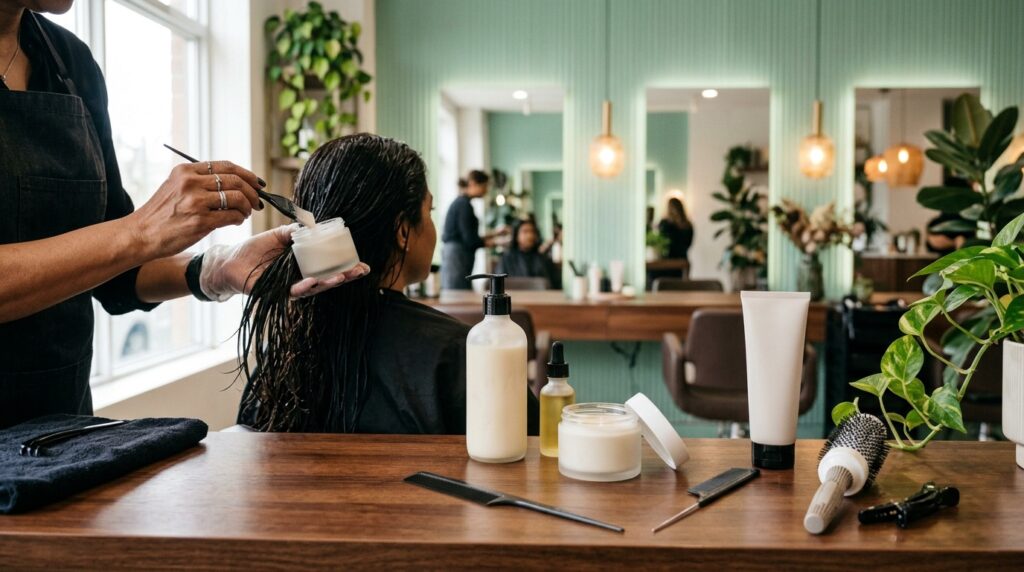
Walk into almost any salon in India right now and you will hear the words “bond repair” within the first five minutes of a consultation. It started with Olaplex, spread through the professional haircare world, and now nearly every brand has its own version. That is not a bad thing, exactly. Bond repair technology genuinely changed what was possible during colour and chemical services. The problem is that it has started to feel like a default add-on rather than a targeted solution, and some clients, and honestly some stylists too, are beginning to wonder whether it is actually doing anything anymore.
What Bond Repair Actually Does (And What It Does Not)
Your hair is held together by disulfide bonds deep inside the cortex. Chemical services like bleaching, colouring, perming and smoothening treatments break some of these bonds as part of how they work. Bond repair treatments are formulated to reconnect broken bonds and strengthen the hair structure from within.
This is real science. It is not marketing fluff. But here is where things get complicated.
Bond repair is designed to address chemical damage. It is not a fix for mechanical damage from heat styling or rough towel-drying. It will not reverse split ends. It does not meaningfully address scalp conditions, hair fall linked to nutrition or hormones, or dryness caused by hard water, which is genuinely brutal in cities like Delhi, Jaipur and parts of Mumbai. If your hair is struggling because of those reasons, layering bond repair on top will feel underwhelming at best.
Many Indian clients are also dealing with a combination of factors at once: pollution, hard water mineral buildup, high humidity in coastal cities, and then chemical services on top of all that. Bond repair addresses one piece of a much larger puzzle.
The Brands and What They Offer
A few names dominate this space in Indian salons right now, and they are not all doing the same thing, even if the category label sounds identical.
Olaplex is where most stylists started and still the most recognised name among clients. The at-home range, particularly No.3 Hair Perfector, has a genuinely strong following. The salon treatments (No.1 and No.2) are meant to be used as part of a colour or chemical service, not as standalone conditioning. Using them incorrectly, as a standalone mask on hair that has not undergone a chemical service, can still provide some surface conditioning but you are not getting the core benefit you paid for.
L’Oréal Professionnel has its own bond-strengthening technology built into various professional service lines. Their approach tends to be integrated into the colour process itself rather than sold as a separate step, which makes the conversation with clients slightly more straightforward.
Kérastase positions bond repair within a broader hair health system. Their Blond Absolu range, for instance, is designed around bleached and highlighted hair rather than claiming to be universally applicable. That specificity is actually more honest and more useful for stylists doing consultations.
Schwarzkopf Professional has built bond protection into several of their colour and technical service lines as well. Again, the focus is integration rather than the stand-alone treatment model.
None of these are interchangeable. The active ingredients, concentration levels and intended use cases differ. Using any of them without understanding that context means you might be spending money, or charging clients money, for a result that does not match expectations.
Who Actually Benefits From Bond Repair
Be honest with yourself here. Bond repair is most genuinely useful for:
- Hair that has undergone bleaching, highlighting or double-process colour services
- Clients having keratin or chemical smoothening treatments regularly
- Hair that is visibly porous, breaks easily or feels like straw after a chemical service
- As a protective measure during a colour service on already compromised hair
It is less likely to deliver dramatic results for:
- Healthy, unprocessed hair that is simply dry or frizzy
- Hair damage caused primarily by heat tools
- Scalp-related concerns
- Hair that is struggling due to hard water buildup (a chelating or clarifying treatment addresses this far better)
If you are an at-home user who has never bleached or coloured your hair and you bought Olaplex No.3 because you saw it on Instagram, it may still feel nice, but you are probably using it for the wrong reason. A deeply nourishing mask or a protein treatment suited to your hair texture might serve you better.
The “Bond Repair Fatigue” Problem
Here is what is genuinely happening in the industry right now. Bond repair became so popular, so fast, that it started being recommended almost reflexively. Client comes in for a colour? Add bond repair. Blowout? Throw in some bond repair. Monthly hair spa? Bond repair again.
Over time, clients who were getting these treatments regularly stopped noticing a difference. Some started to feel like their hair was not improving or was even feeling heavier and less responsive. This is not because the technology stopped working. It is because it was being used without a clear diagnosis of what the hair actually needed.
There is also a saturation issue. When every brand launches a bond repair product and every salon includes it in every service, the word loses meaning. Clients cannot tell what they are paying for and stylists lose a genuinely powerful tool in the noise.
What to Do Instead: A More Targeted Approach
Think of your hair like a patient walking into a clinic. A good doctor does not prescribe the same medication to everyone who walks in. They diagnose first.
For most Indian hair and scalp concerns, a layered approach works better than defaulting to bond repair every time:
- Start with a scalp assessment. Is there buildup from hard water, oil or product? A clarifying or chelating shampoo before any treatment is non-negotiable, especially in hard water cities. Putting bond repair on mineral-coated hair significantly reduces its effectiveness.
- Identify the actual damage type. Is it chemical, mechanical or environmental? The answer changes what you reach for.
- Use bond repair when it is genuinely indicated. During or after a bleaching session, during a chemical relaxer, when a client’s hair integrity is visibly compromised before a colour service. That is where it earns its place.
- Rotate treatments based on what the hair needs that month. Protein treatments, moisture-based masks, scalp treatments and bond repair all have their role. They should not compete with each other or all happen in the same session.
- Educate clients on at-home maintenance that actually matches their hair type. A client with fine, unprocessed hair in a humid coastal city does not need the same routine as someone with coarse, colour-treated hair in a dry, hard-water city.
For Salon Professionals
Rethink the Consultation Before You Rethink the Menu
The most immediate change you can make does not cost anything. It is adding two minutes to your consultation to ask: when was the last chemical service, what is the client’s water source at home, and what results are they actually not happy with? Those three questions will tell you whether bond repair is the right call or whether you should be reaching for something else entirely.
Stop Treating Bond Repair as a Universal Add-On
When bond repair is added to every single service regardless of hair condition, two things happen. First, clients stop associating it with a specific benefit, so they stop valuing it. Second, you dilute your ability to use it as a genuine upsell when it is actually warranted. Reserve it for chemical services, visibly compromised hair, and clients who are actively bleaching or colouring regularly. When you recommend it in those moments with a clear explanation, clients understand what they are paying for and the results are visible enough to reinforce trust.
Hard Water Is a Real Variable You Cannot Ignore
In Delhi, parts of Rajasthan, Bengaluru and many other cities, hard water is depositing minerals on the hair shaft constantly. This creates a barrier. Bond repair molecules, protein treatments and even conditioning agents cannot penetrate properly when that barrier exists. A chelating shampoo or a dedicated hard water treatment at the start of a service is not an optional luxury step. It is a clinical necessity if you want your professional treatments to actually work. Build it into your service protocol and explain to clients why it is there.
Portfolio Your Treatments Properly
Your treatment menu should have clear distinctions between bond repair, protein reconstruction, moisture treatments and scalp care. If everything is listed as a “hair spa” with vague descriptions, clients cannot make informed choices and you cannot upsell appropriately. Give each service a clear one-line purpose: who it is for, what it fixes, how often it should be done. This also makes it far easier to train junior stylists to recommend the right thing.
The Retail Conversation
Bond repair retail products are a genuine opportunity, but only when they are recommended specifically. Saying “you should take this home” without context is the fastest way to a product that sits unused and a client who does not return. Instead, tie the retail recommendation directly to what you just did in the chair: “We used a bond repair treatment today because of the bleach we did. This at-home version is meant to continue that between visits. Use it once a week, not every wash.” That specificity builds retail loyalty and trust simultaneously.
Safety and Chemical Service Notes
If you are incorporating bond repair into bleach or colour services, ensure your team understands that bond repair additives can sometimes affect processing times, depending on the product and the formula you are using. Always conduct strand tests when introducing a new product combination. For clients with scalp sensitivity or any active scalp conditions, check the formulation carefully and consider a patch test 48 hours before a service. If a client reports unusual scalp reactions, refer them to a dermatologist before proceeding with any chemical service.
FAQs
Is Olaplex No.3 worth using at home if I have not coloured or bleached my hair?
It will likely feel like a conditioning treatment and your hair may feel smoother, but you are not addressing the specific damage it was designed for. If your main concern is dryness, frizz or general manageability, a good moisture mask or a protein treatment suited to your hair type may give you more noticeable results for similar or less money.
How often should I get a bond repair treatment at the salon?
It depends on how frequently you do chemical services. If you are colouring or highlighting regularly, once a month or incorporated into each colour session makes sense. If you are not doing any chemical services, there is no fixed rule and no particular benefit to doing it very frequently. Your stylist should be assessing your hair condition each visit rather than scheduling it automatically.
My hair feels dry and damaged from hard water in Delhi. Will bond repair help?
Hard water mineral buildup is a separate issue from bond damage and bond repair alone will not solve it. You need a chelating or clarifying treatment first to remove the mineral deposits. Once that layer is cleared, any treatment you apply, including bond repair if it is relevant to your hair history, will actually be able to do its job properly. Ask your salon specifically about hard water treatments as a starting point.