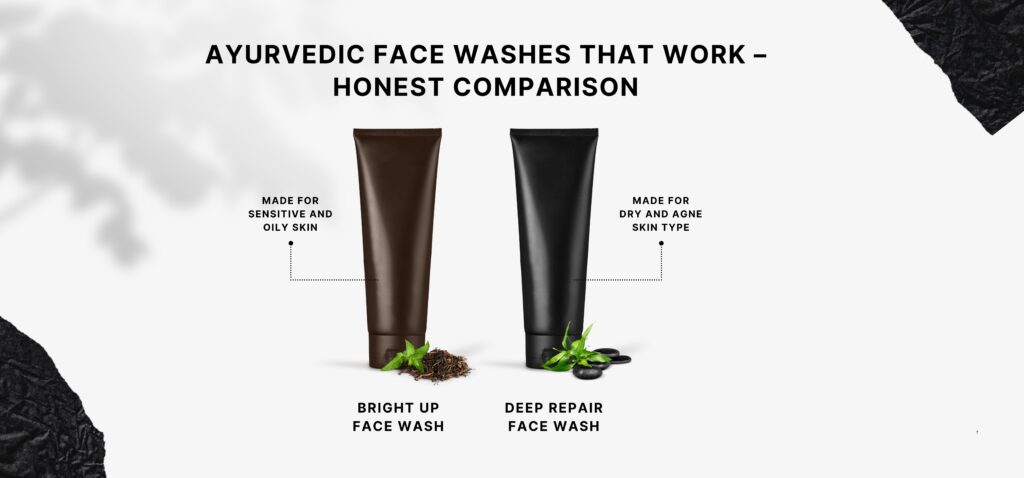
Introduction
Ayurvedic face washes have become increasingly popular because many people now prefer gentler and more natural skincare routines. Traditional Ayurvedic cleansing focuses on balancing the skin while maintaining hydration instead of aggressively stripping away natural oils.
However, not every Ayurvedic face wash works the same way. Some are better for oily skin, while others focus more on hydration, soothing, or glow enhancement.
What Makes Ayurvedic Face Washes Different
Ayurvedic face washes usually rely on herbs, botanical extracts, and traditional ingredients instead of heavily synthetic cleansing systems.
Common ingredients often include neem, turmeric, sandalwood, saffron, tulsi, aloe vera, and rose water. These ingredients are widely associated with soothing, cleansing, and balancing properties.
Ayurvedic vs Chemical Cleansers
One of the biggest differences is how the skin feels after cleansing.
Many Ayurvedic cleansers focus on gentle cleansing while helping maintain moisture balance, whereas harsher cleansers may leave the skin feeling tight or overly dry.
Best for Oily and Acne-Prone Skin
Neem and turmeric-based Ayurvedic cleansers are commonly preferred for oily and breakout-prone skin.
These ingredients are often associated with balancing excess oil and maintaining cleaner-looking skin. This supports fresh and balanced skin appearance.
Best for Dry Skin
Dry skin usually responds better to hydrating Ayurvedic ingredients like aloe vera, honey, almond oil, and rose water.
These ingredients help support soft and comfortable skin texture without excessive dryness.
Best for Sensitive Skin
Sensitive skin often reacts better to soothing Ayurvedic ingredients such as sandalwood, aloe vera, and chamomile-inspired herbal blends.
Gentle cleansing supports calm and balanced skin condition naturally.
Best for Glowing Skin
Saffron, turmeric, and sandalwood are among the most discussed Ayurvedic ingredients for brightness-focused skincare.
These ingredients are commonly associated with healthy and naturally radiant-looking skin.
The Biggest Problem with “Herbal” Labels
One important issue is that many products marketed as herbal or Ayurvedic may still contain strong surfactants, synthetic fragrance, or heavy foaming agents.
Some skincare discussions online warn that excessive foaming and strong fragrance may indicate harsher cleansing systems.
Signs of a Gentle Ayurvedic Face Wash
A balanced Ayurvedic cleanser usually focuses on:
Mild cleansing
Maintaining moisture balance
Low irritation potential
Gentle daily use
Support for natural skin barrier comfort
This contributes to healthy and refreshed-looking skin condition.
Why Skin Type Still Matters
Even natural ingredients may not suit every skin type equally.
Oily skin usually needs balancing care, while dry skin requires more hydration-focused cleansing. Choosing according to skin condition supports better long-term skin comfort.
Common Ayurvedic Ingredients and Their Roles
Neem – Commonly associated with oil balance and acne care
Turmeric – Often linked with soothing and brightening support
Sandalwood – Known for calming and cooling properties
Rose water – Supports hydration and freshness
Aloe vera – Helps maintain moisture comfort
Tulsi – Commonly used in purifying-focused skincare
These ingredients are widely discussed across Ayurvedic skincare guides.
Common Mistakes to Avoid
Overwashing the face
Using very hot water
Choosing harsh foaming cleansers
Ignoring skin sensitivity
Switching face washes too frequently
Avoiding these mistakes helps maintain comfortable and balanced skin condition.
What Results Look Like Over Time
With consistent and gentle cleansing, the skin may appear fresher, smoother, and healthier.
You may notice improved comfort and reduced dryness or oil imbalance. This contributes to healthy and naturally refreshed-looking skin.
Conclusion
Ayurvedic face washes work best when chosen according to your skin type and sensitivity level. Gentle cleansing, balanced hydration, and natural ingredient-focused routines help support healthier-looking skin naturally over time.
Disclaimer
This content is for informational purposes only and should not be considered medical advice. Skin responses vary, so choose routines based on your individual skin condition.