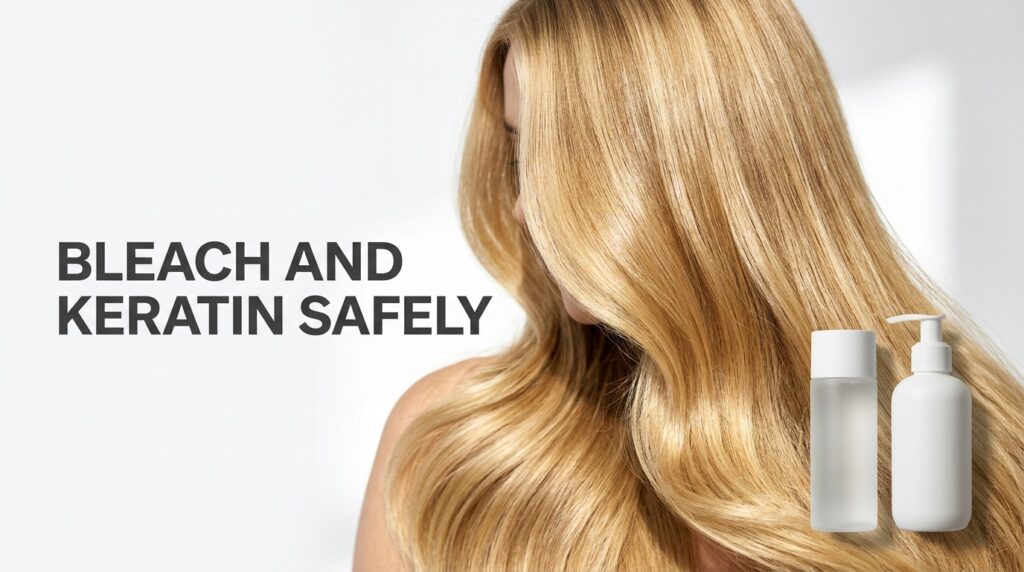
The dream of going blonde and having smooth, frizz-free hair is very real and achievable. However, combining these services back to back or doing them in the incorrect order can push your hair beyond its limits. It’s important to know what to expect before booking an appointment, whether you’re planning it yourself or want to ensure the salon follows the right process.
Why This Combination Is Tricky
Bleaching and keratin treatments are both intensive chemical processes. The bleach lifts the hair’s cuticle and breaks down melanin to remove colour. Keratin treatments, in contrast, infuse the hair shaft with protein and use heat, and often chemistry involving formaldehyde or its alternatives, to seal the cuticle and smooth the hair.
The issue arises because freshly bleached hair is left porous, swollen, and weakened. Applying a keratin treatment immediately afterwards adds more chemical stress onto hair that’s not yet stabilized. This can lead to over-processing, resulting in brittle ends, excessive breakage, or sections of hair breaking off entirely. In India, hard water and humidity can make over-processed hair behave even worse, as porous hair tends to absorb mineral deposits and moisture unevenly.
However, this doesn’t mean you can’t do both. It just means the sequence and timing are critical.
The Right Order: Bleach First, Always
If you want both blonde and smooth hair, bleaching should come first. Here’s why: keratin treatments coat and seal the hair shaft. If you bleach after applying a keratin treatment, the bleach must penetrate that coating to alter the colour, leading to unpredictable results and a higher chance of damage. Bleaching freshly treated hair can also strip the treatment away, wasting your money and time.
Therefore, the correct order is essential: colour and bleach first, then keratin.
The Waiting Period: Why It Cannot Be Skipped
Most professional stylists advise a waiting period of at least two to four weeks between bleaching and a keratin treatment. Some may recommend up to six weeks, particularly if significant lifting or multiple bleaching sessions occurred.
This waiting period is vital for a proper hair repair phase. Bond-building treatments like Olaplex No. 3 Hair Perfector, used weekly at home, or in-salon Olaplex treatments during and after bleaching, are essential. These treatments repair broken disulfide bonds within the hair cortex, helping to restore some of the structural integrity lost during bleaching. L’Oréal Professionnel’s Série Expert Metal Detox range is also beneficial in neutralizing metal deposits from hard water, which can worsen hair porosity in cities like Delhi, Mumbai, and Bengaluru, known for their harsh water quality.
During this time, use a protein-rich conditioner or mask. Options from Wella Professionals or Schwarzkopf Professional’s BC Bonacure range are recommended. Minimize heat styling and let your hair rest.
Choosing the Right Keratin Treatment for Bleached Hair
Keratin treatments vary, and this is crucial for bleached hair. Though bleached hair is protein-saturated in some ways, it’s structurally compromised in others. This may seem contradictory, but it’s the reality.
Consider these points with your stylist:
- Formaldehyde-free options: Traditional keratin treatments with formaldehyde release are harsher on the hair shaft. For bleached hair, many professionals suggest gentler, formaldehyde-free, or low-aldehyde formulations. Brands like Schwarzkopf Professional and L’Oréal Professionnel provide relevant smoothing systems.
- Processing time and heat settings: Bleached hair is porous, absorbing treatment faster than virgin hair. An experienced stylist will adjust processing time and flat iron settings, using lower heat on weakened strands.
- Strand test first: This step isn’t optional. A strand test should assess hair elasticity and integrity before any keratin treatment on bleached hair. If the hair stretches without returning or breaks under minimal tension, it may not be ready.
What Results You Can Realistically Expect
Here’s the truth. Bleached, keratin-treated hair in India, especially in humid coastal areas or during monsoon months, won’t mimic the results seen in European or American tutorials. High humidity challenges the keratin seal, but you’ll experience far less frizz and greater manageability than untreated bleached hair, which can be impossible to handle in July.
The smoothing effect on bleached hair generally doesn’t last as long as on virgin or darker hair, expect about eight to twelve weeks, instead of the three to five months possible on less processed hair. This is because the bleached hair’s porous cuticle doesn’t hold the treatment as well.
Discuss realistic expectations with your stylist before committing.
Aftercare That Actually Protects Both Services
Once you’ve done both services, maintaining them becomes crucial.
- Use a sulphate-free shampoo. Sulphates harshly strip both colour and keratin treatments.
- Opt for a colour-safe, protein-balanced conditioner. Excessive protein on already-processed hair can cause stiffness and breakage, so balance is key.
- Continue using Olaplex No. 3 weekly to support bond integrity after services.
- Avoid swimming in chlorinated pools or the sea without protection like a swim cap or oil coating. Chlorine and saltwater are extremely damaging to bleached, keratin-treated hair.
- Manage hard water. Use a gentle chelating shampoo monthly if your city’s water is mineral-heavy. This prevents buildup that dulls blonde hair and weakens the keratin seal.
- Apply a heat protectant every time you use a dryer or iron. There are no exceptions.
Who Should Approach This With Extra Caution
Communicate openly with your stylist about your hair history. If your hair has experienced any of the following, the interval between services might need to be longer, or the keratin treatment should be delayed until hair health improves:
- Multiple bleaching sessions in a short period, or efforts to transition from very dark to very light.
- Previous chemical relaxers or smoothing treatments. Bleaching over relaxed hair poses a high risk.
- Noticeable breakage or loss of elasticity before starting.
- Very fine or thin hair, as it is less tolerant of numerous chemical treatments.
If your scalp feels excessively irritated, develops sores, or reacts beyond mild, temporary sensitivity, stop the service and consult a dermatologist. Chemical treatments should never proceed on a compromised scalp.
For Salon Professionals
When a client asks for blonde hair and a keratin treatment, your initial responsibility is to conduct a thorough consultation before booking or pricing any service.
Consultation Checklist
- Full chemical history: previous relaxers, rebonding, colour treatments, and any home bleaching attempts. Indian clients may underreport at-home box colours or DIY highlights, so ask directly.
- Hair elasticity and porosity test: wet a few strands and stretch gently. No return or immediate snap means the hair isn’t ready for another chemical service regardless of time passed.
- Strand test with intended keratin formula before full application on bleached hair. Do this at each appointment, not just the first.
- Scalp assessment: ensure no active irritation, sores or dermatitis before proceeding with bleach. Reschedule if necessary and advise seeing a dermatologist.
Service Sequencing and Timing
Schedule the bleach appointment first. Utilize a bond multiplier like Olaplex No. 1 and No. 2 during and after bleaching. This is now standard practice, not optional. If the client requires multiple sessions to reach their desired level, complete all with bond care before discussing the keratin date.
Advise a minimum two-week gap, and four weeks is more professionally responsible. Use this time to recommend an at-home repair routine: Olaplex No. 3 weekly, a sulphate-free hydrating shampoo, and a protein-balanced mask. Wella Professionals FUSIONPLEX or the Schwarzkopf Professional BC Bonacure Fibre Force range are excellent choices to suggest at this stage. Clients who adhere to a proper repair routine return with hair that accepts the keratin treatment more evenly.
Keratin Application Adjustments for Bleached Hair
- Choose a lower-aldehyde or formaldehyde-free formula if your expertise supports it for the hair type.
- Reduce the flat iron’s passes and temperature compared to your procedure on virgin hair, as bleached hair processes treatments faster. Over-ironing can lead to brittleness and colour fading.
- Apply the treatment in fine sections to ensure even saturation, especially on very porous ends that tend to absorb product unevenly.
- Document everything: formula used, processing times, iron temperature, client’s hair condition at each visit. This protects you professionally and aids in refining your approach for each client.
Retail and Rebooking
Clients requiring this combination present considerable retail opportunities due to their hair’s genuine maintenance needs. At checkout, recommend a sulphate-free shampoo, Olaplex No. 3, and a colour-safe mask. Clearly explain their benefits and they will likely purchase. Schedule the keratin touch-up at eight to ten weeks due to the shorter longevity on bleached hair and plan a colour gloss or toner refresh to maintain a vibrant blonde appearance. Regular service cycles benefit your business and, more importantly, ensure your client’s hair remains healthy.
FAQs
How long after bleaching can I get a keratin treatment in India?
It is generally advised to wait at least two to four weeks after bleaching before undergoing a keratin treatment. For severely damaged hair or following multiple bleach sessions, waiting four to six weeks while performing bond repair treatments in between is safer. The stylist should conduct a strand test before proceeding, irrespective of the waiting period.
Will keratin treatment make my bleached hair more damaged?
Performed too soon after bleaching, it can indeed lead to further breakage and brittleness. When done correctly after an appropriate interval, with the right formula and technique, a keratin treatment can improve the manageability of bleached hair and reduce the mechanical damage caused by day-to-day frizz taming. Timing, bond repair in between, and selecting an experienced stylist to adjust processes for lightened hair are essential.
Does keratin treatment on bleached hair last as long as on normal hair?
In most cases, no. Bleached hair’s open, porous cuticle doesn’t retain the keratin coating as well as virgin or darker hair. The smoothing effect usually lasts eight to twelve weeks, compared to the possible three to five months on less processed hair. Consistent use of sulphate-free shampoo and avoidance of chlorine and salt water will help extend the treatment’s effects.