The bond-repair category has exploded. Walk into any professional salon retail shelf or scroll through an online store and you’ll find dozens of products with “Plex,” “Bond,” or “Linking” somewhere on the bottle. Some of them are genuinely excellent. Others are essentially a protein treatment wearing a fancy lab coat. If you already have your protein routine sorted and you’re specifically looking for true bond-repair, here’s how to cut through the noise and find what actually does the job.
First, What Does “Bond Repair” Actually Mean?
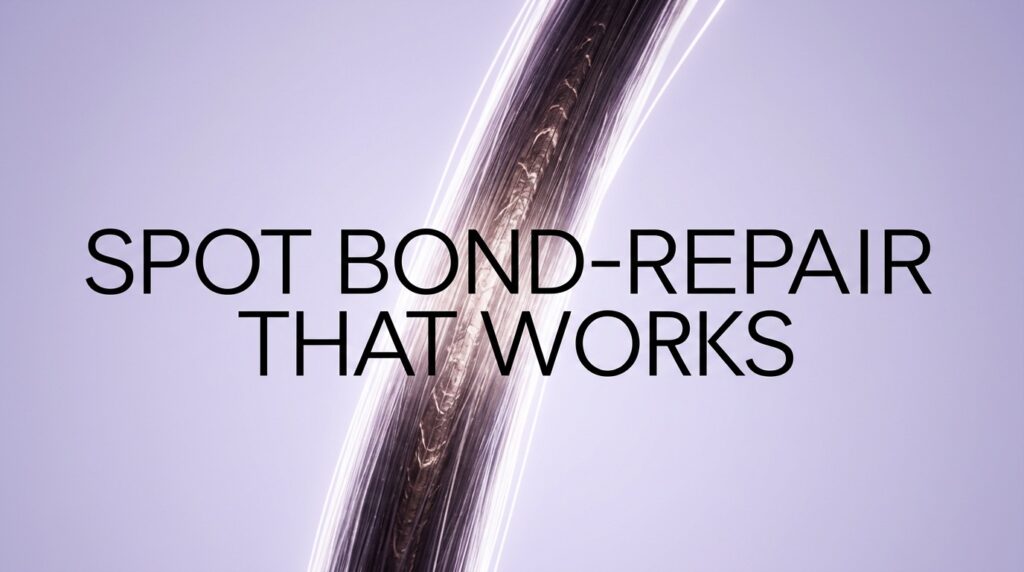
Your hair strand is held together by different types of chemical bonds. The ones we care about most in the context of colour, bleach, heat and chemical services are disulfide bonds, which are the structural backbone of the hair’s keratin protein chains, and salt bonds, which are weaker but numerous. Chemical services, particularly bleaching and permanent colour, break disulfide bonds as part of how they work. The hair is left structurally weaker.
True bond-repair chemistry works by either protecting these bonds during a chemical service or helping to reform broken ones after the fact. The original technology that made this category famous, Olaplex‘s bis-aminopropyl diglycol dimaleate, works by linking broken disulfide bond halves back together. That is a specific chemical action, not a conditioning or coating effect.
Protein treatments do something related but different. They fill gaps in the cuticle and cortex with hydrolysed proteins, which temporarily strengthen and smooth the hair. Both are valuable. But if a product calls itself a bond repairer and it is doing primarily protein work, you deserve to know that before you spend the money.
The Ingredient List Is Where the Truth Lives
This is the most important skill you can build, and it takes about two minutes once you know what to look for.
Ingredients Associated With Genuine Bond-Repair Chemistry
- Bis-aminopropyl diglycol dimaleate: the active in Olaplex, widely documented and the benchmark ingredient.
- Maleic acid: a simpler maleic acid derivative used in some bond-support formulas, often seen in pre-treatment products used before bleach.
- Croconaine dyes or succinic acid derivatives: some newer professional lines use related chemistry. If you see these, it is worth researching that specific product further.
- Glyoxylic acid: more common in smoothening treatments, but it does interact with the hair’s bond structure.
The key is that these ingredients are doing a chemical job, not just a conditioning one. They appear in relatively small concentrations in a formula, so don’t panic if they’re not listed first. Cosmetic ingredient lists are ordered by concentration, and actives routinely sit near the middle or end.
Ingredients That Signal a Protein-Forward Product
- Hydrolysed keratin, hydrolysed wheat protein, hydrolysed silk, hydrolysed quinoa
- Amino acids such as arginine, cysteine, glutamine
- Biotin (often added as a marketing nod, not a structural ingredient)
Again, none of these are bad. If your hair is porous, fine or just needs strengthening, a good protein treatment is exactly right. But they are not bond repair in the disulfide-chemistry sense, no matter what the front of the bottle says.
How to Evaluate “Plex” and “Bond” Product Lines
Here is a practical framework. When you pick up any new bond-focused product, do this before buying.
- Flip to the ingredient list. Look for the specific actives above. If you see only proteins, amino acids and conditioning agents, you’re holding a protein treatment.
- Check whether it’s designed to be used in-service or as a standalone. Genuine bond-repair products often have a step meant to be used during a colour or bleach application, not just as a post-wash conditioner. That in-service step is where the real protection happens.
- Read the brand’s published documentation, not just the marketing copy. Professional brands like Schwarzkopf Professional, L’Oréal Professionnel and Wella Professionals publish technical guides for their service ranges. If a bond claim is real, they will describe the chemistry somewhere in that documentation.
- Look at the price context. True bond-repair actives cost money to formulate with. A product priced at the lower end of the market that claims to repair bonds is worth scrutinising extra carefully.
Professional Lines Worth Knowing About
Olaplex remains the most documented and independently discussed bond-builder on the market. The No.3 Hair Perfector is the at-home treatment, and the shampoo and conditioner in the range are designed to support the bond-repair environment rather than actively rebuild bonds the way No.3 does. Use them together for best results, but know that the shampoo alone is a maintenance product, not a repair treatment.
The skip-it note: Olaplex does not work as a standalone solution for severe mechanical damage, extreme heat damage or hair that is already breaking off. It works on chemical bond damage. If your hair is snapping from over-brushing or years of tight braiding, you need a different approach first.
Schwarzkopf Professional’s BC Bonacure range includes lines that address bond-related concerns, particularly around colour-treated and bleached hair. Their formulations often combine bond-supporting and protein elements. Check the specific product’s ingredient list, because within a large range, some products will be more protein-driven than others.
L’Oréal Professionnel’s Metal Detox range takes an interesting angle: it targets metal ions that accumulate in hair from hard water and water with high iron content, which is genuinely relevant in many Indian cities. Metal build-up makes hair more reactive to bleach and can compromise colour results. This isn’t bond repair in the classic sense, but it addresses a real structural concern that gets ignored.
Wella Professionals’ WELLAPLEX is their in-salon bond-strengthening system designed to be used during colour and lightening services. Like most professional systems in this category, the in-service steps are where the actual structural work happens. The maintenance shampoo and conditioner are support products. Worth knowing if your salon uses Wella colour services.
Using Bond-Repair Products at Home: What Actually Makes a Difference
Indian hair faces some specific challenges that affect how these products perform. Hard water, high humidity during the monsoon, heat from styling tools used almost daily in many households, and pollution in cities like Delhi and Mumbai all stress the hair’s surface and internal structure. Here’s how to get the most from a bond-repair routine at home.
- Use a clarifying shampoo once a month. Hard water mineral build-up sits on the hair and prevents active ingredients from penetrating. A clarifying wash before a bond-repair treatment makes a real difference.
- Apply your treatment on damp, not dripping wet hair. Too much water dilutes the product before it has a chance to work.
- Give it time. Most at-home bond treatments ask for a minimum leave-in time. Don’t rush this. Heat from a shower cap or a warm towel wrap can help if the instructions allow it, as warmth aids penetration.
- Do not overload with bond treatment and protein treatment in the same session. Pick one focus per wash day. Too much of either can make hair feel stiff and eventually lead to over-conditioning or build-up.
- Protect with heat spray before styling. Bond repair rebuilds structure, but heat without protection undoes that work quickly.
Who Should Use Bond-Repair Products and Who Should Skip Them
Bond-repair products are genuinely useful for hair that has had chemical services: bleaching, permanent colour, perms, relaxers, keratin treatments. They’re also helpful for hair that is regularly exposed to high heat styling.
If your hair is virgin, healthy and just needs moisture and shine, you don’t need a bond-repair product. A good hydrating conditioner and hair oil will serve you better and cost less. Spending on bond repair when your bonds aren’t damaged is money that could go toward a really good deep conditioning mask instead.
Also worth saying: if your hair is severely damaged, breaking near the root, or you have scalp concerns like consistent itching or unusual shedding, please see a trichologist or dermatologist before spending money on any product line. Products work on the hair shaft. They cannot address scalp health issues.
For Salon Professionals
If you’re a stylist or salon owner building or refining your bond-repair service menu, here is the practical side of this conversation.
Consultation: Qualify Before You Recommend
The consultation before any colour or lightening service should include a bond-repair conversation, but it needs to be an honest one. Ask your client directly: Have they used a bond-building product at home recently? Some at-home bond treatments, particularly those that involve certain maleic acid derivatives, can affect how lightener lifts on the hair. Know what they’ve been using before you mix a formula.
Also assess whether the hair actually needs bond repair or whether it needs protein, moisture or a cut. Prescribing bond-repair services to clients who need a protein treatment instead creates a situation where the client doesn’t see the result they expected, and that conversation is awkward for both of you.
In-Service Steps Matter More Than the Retail Product
The maintenance shampoo and conditioner from any bond-repair line support the work done in-service. The actual structural repair, when it happens, happens during the chemical service when the bond-repair additive is mixed in or applied as a pre-treatment. Communicate this clearly to clients so they understand that the shampoo they take home is a supporting actor, not the lead.
When training junior stylists, make sure they understand this distinction. A client who buys the shampoo but skips the in-salon service will get some benefit but not the result they saw in the chair.
Retail and Service Menu Considerations
For your service menu, consider offering bond-repair as an add-on to any colour or lightening service rather than a standalone treatment in most cases. This positions it correctly as a protective measure during chemical work, which is where the science supports it most clearly.
When retailing the maintenance range, be specific with your client about what step to use and when. A client who understands that the treatment step (like Olaplex No.3) needs 20-plus minutes to work will actually use it correctly at home and come back saying it made a difference. That drives retail repeat purchases far better than a vague recommendation.
Be transparent about pricing. Bond-repair add-ons in Indian salons vary broadly in cost depending on the city and the product line used. Price your service based on your actual product cost and time, and explain the value clearly. Clients who understand what they’re paying for are far more likely to rebook than clients who feel they’ve been upsold on something they don’t understand.
Aftercare Advice to Give Every Client
- Recommend a monthly clarifying shampoo, especially for clients in hard-water cities, to keep the hair ready to receive treatment benefits.
- Advise against mixing bond-repair and heavy protein treatments in the same at-home session.
- For clients who heat-style daily, remind them that bond repair is undone faster without a heat protectant. Retail a heat spray alongside the bond treatment.
- Schedule realistic re-service timelines. Depending on the level of damage, a bond-repair add-on at every colour visit is reasonable. A standalone bond-repair service every six to eight weeks is a common starting point for heavily processed hair.
FAQs
Can I use a bond-repair shampoo every day instead of my regular shampoo?
You can use a bond-repair shampoo daily if it suits your hair type, but keep realistic expectations. The shampoo and conditioner from most bond-repair lines are maintenance products designed to preserve the work done by an intensive treatment step. Using only the shampoo without the treatment step gives limited structural benefit. Think of it as upkeep, not repair.
Is there a bond-repair product that works for Indian hair with hard water damage?
Hard water deposits minerals on the hair shaft and can make it feel rough and dull, but this is a different problem from bond damage caused by chemical services. Start with a clarifying or chelating shampoo to remove mineral build-up first. L’Oréal Professionnel’s Metal Detox range specifically addresses metal ion accumulation, which is relevant for hard-water areas. Once the build-up is cleared, a bond-repair or deep conditioning treatment will penetrate and perform much better.
How do I know if my hair needs bond repair or just protein?
A simple test: wet a small section of your hair and gently stretch it. If it stretches a little and springs back, moisture and conditioning are what you need. If it stretches a lot before snapping, or if it snaps with almost no stretch, your hair likely needs protein. Bond repair is most relevant when your hair has been chemically processed and feels weak, gummy when wet, or is taking colour unevenly. If you’re unsure, have a professional stylist assess your hair before investing in a product line.