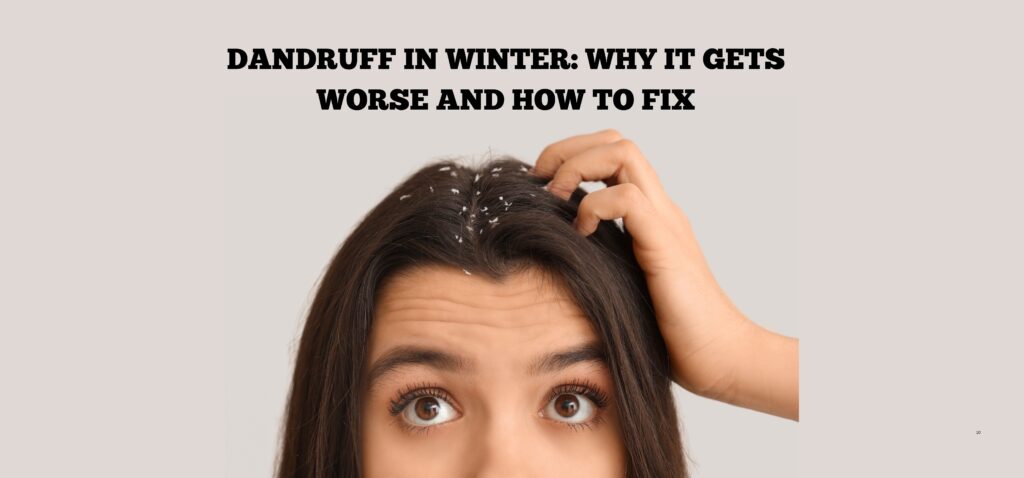
Many people notice that their dandruff seems to get worse as soon as winter arrives. Flakes become more visible, the scalp feels itchier, and dark clothing suddenly becomes a challenge. If you’ve experienced this seasonal change, you’re certainly not alone.
Winter can create conditions that make dandruff more noticeable and harder to manage. The combination of cold weather, dry indoor air, and changes in scalp health can contribute to increased flaking and irritation.
The good news is that understanding why dandruff worsens during winter can help you take the right steps to keep your scalp comfortable and healthy throughout the season.
What Is Dandruff?
Dandruff is a common scalp condition characterized by:
- White or yellowish flakes
- Scalp itching
- Mild irritation
- Increased shedding of scalp skin cells
Although dandruff is often mistaken for simple dryness, it can involve several factors, including scalp oil production, skin sensitivity, and the presence of naturally occurring microorganisms such as Malassezia.
Why Does Dandruff Get Worse in Winter?
Several seasonal factors can contribute to worsening dandruff.
Dry Air and Low Humidity
Winter air typically contains less moisture than warmer seasons.
In addition, indoor heating systems can further reduce humidity levels.
These conditions may cause the scalp to become:
- Drier
- More sensitive
- More prone to flaking
As the scalp loses moisture, dandruff symptoms may become more noticeable.
Increased Scalp Irritation
Cold temperatures can affect the skin’s protective barrier.
When the scalp barrier becomes compromised, irritation and itching may increase.
This irritation can encourage more scratching, which may further aggravate the scalp.
Hot Showers
Many people enjoy long, hot showers during winter.
While relaxing, very hot water can strip away natural oils from the scalp.
This may leave the scalp feeling dry and irritated.
Over time, excessive dryness can contribute to visible flaking.
Wearing Hats Frequently
Winter hats help keep you warm, but they may also create a warm environment where sweat and oil accumulate.
For some individuals, this combination can contribute to scalp discomfort and dandruff flare-ups.
This doesn’t mean you should avoid hats—just make sure they are clean and breathable.
Changes in Scalp Oil Balance
The scalp constantly works to maintain a balance between oil and moisture.
Winter weather can disrupt this balance.
Some people experience excessive dryness, while others may notice that oil and dead skin cells accumulate more easily, leading to visible flakes.
Stress During Seasonal Changes
The winter season can sometimes bring increased stress due to work, holidays, lifestyle changes, or reduced outdoor activity.
Stress may contribute to various skin and scalp concerns, including dandruff flare-ups.
Winter Dandruff vs Dry Scalp
These two conditions are often confused.
Dry Scalp
Usually causes:
- Small, dry flakes
- Tightness
- Mild itching
- Lack of oil
Dandruff
Often involves:
- Larger flakes
- Persistent itching
- Oily or irritated scalp
- Recurring symptoms
Understanding the difference can help you choose the most appropriate treatment approach.
How to Fix Winter Dandruff
Use an Anti-Dandruff Shampoo
One of the most effective ways to manage dandruff is by using a shampoo designed specifically for scalp flaking and irritation.
Common active ingredients include:
- Ketoconazole
- Zinc pyrithione
- Selenium sulfide
- Salicylic acid
These ingredients help address factors associated with dandruff and scalp imbalance.
Avoid Overwashing
Washing too frequently can sometimes strip the scalp of its natural oils.
The ideal washing schedule depends on your scalp type, but balance is important.
Aim to keep the scalp clean without causing excessive dryness.
Moisturize the Scalp
A healthy scalp barrier helps reduce irritation and dryness.
Using scalp-friendly moisturizing products may help maintain comfort during winter months.
Choose products that are designed for scalp use rather than heavy oils that may contribute to buildup.
Lower the Water Temperature
Lukewarm water is generally gentler on the scalp than very hot water.
Reducing shower temperature may help prevent excessive dryness and irritation.
Stay Hydrated
While drinking water alone won’t eliminate dandruff, proper hydration supports overall skin health, including the scalp.
Maintaining adequate fluid intake can help support healthy skin function.
Use a Humidifier
Indoor heating often reduces moisture in the air.
A humidifier can help add moisture back into your environment, potentially reducing scalp dryness during winter.
Avoid Excessive Scratching
Scratching may provide temporary relief, but it can worsen irritation and damage the scalp barrier.
Instead, focus on treating the underlying cause of itching.
Choose Gentle Hair Products
Harsh products can sometimes increase scalp sensitivity.
Look for products that support scalp comfort and avoid unnecessary irritation.
Foods That Support Scalp Health
While no food can instantly cure dandruff, overall nutrition plays a role in maintaining healthy skin.
Consider including foods rich in:
- Omega-3 fatty acids
- Zinc
- Protein
- Vitamins
- Antioxidants
A balanced diet supports healthy scalp function from within.
Common Winter Dandruff Mistakes
Ignoring the Problem
Many people assume dandruff will disappear on its own.
Without proper care, symptoms may persist or worsen.
Using Very Hot Water
Hot showers may feel comforting but can contribute to scalp dryness.
Applying Excessive Oil
While oil may temporarily soften flakes, heavy oiling can sometimes worsen dandruff associated with Malassezia.
Switching Products Too Frequently
Many treatments require several weeks of consistent use before noticeable improvement occurs.
When Should You See a Dermatologist?
Consider professional evaluation if:
- Dandruff becomes severe
- Symptoms persist despite treatment
- The scalp becomes painful
- Redness increases
- Hair shedding becomes excessive
A dermatologist can determine whether another scalp condition may be contributing to your symptoms.
Can Winter Dandruff Cause Hair Loss?
Winter dandruff itself does not typically cause permanent hair loss.
However, severe itching and excessive scratching may contribute to temporary hair shedding.
Treating the scalp condition often helps improve overall scalp health and reduce unnecessary hair loss.
Preventing Winter Dandruff
A few preventive habits can make a significant difference:
- Maintain a regular hair-washing routine
- Use scalp-friendly products
- Avoid overly hot showers
- Stay hydrated
- Manage stress levels
- Protect the scalp from extreme weather
Consistency is often the key to keeping dandruff under control throughout the colder months.
Final Thoughts
Winter creates unique challenges for scalp health. Cold temperatures, dry air, indoor heating, and changes in moisture balance can all contribute to worsening dandruff and scalp irritation.
Fortunately, winter dandruff is usually manageable with the right approach. Using appropriate anti-dandruff products, avoiding excessive dryness, maintaining a healthy scalp barrier, and practicing good hair care habits can help reduce flakes and itching significantly.
Rather than viewing winter dandruff as an unavoidable seasonal problem, think of it as a signal that your scalp may need a little extra attention. With consistent care, you can keep your scalp healthier, more comfortable, and largely flake-free throughout the season.
Disclaimer
Disclaimer: This article is for informational purposes only and should not be considered medical advice. Persistent dandruff, scalp irritation, or excessive hair loss should be evaluated by a qualified healthcare professional or dermatologist for proper diagnosis and treatment.
Frequently Asked Questions (FAQs)
1. Why does dandruff get worse during winter?
Cold weather, dry air, indoor heating, and scalp irritation can all contribute to increased flaking and itching during winter.
2. Is winter dandruff the same as a dry scalp?
Not always. A dry scalp usually produces small, dry flakes, while dandruff often involves larger flakes, itching, and scalp imbalance.
3. Can hot showers worsen dandruff?
Yes. Very hot water can strip natural oils from the scalp and contribute to dryness and irritation.
4. Should I oil my scalp if I have winter dandruff?
Heavy oiling may not always help and can sometimes worsen dandruff associated with Malassezia. Choose scalp-friendly products instead.
5. How can I prevent dandruff in winter?
Using anti-dandruff shampoo, avoiding excessive heat, staying hydrated, managing stress, and maintaining a consistent scalp care routine can help prevent winter flare-ups.