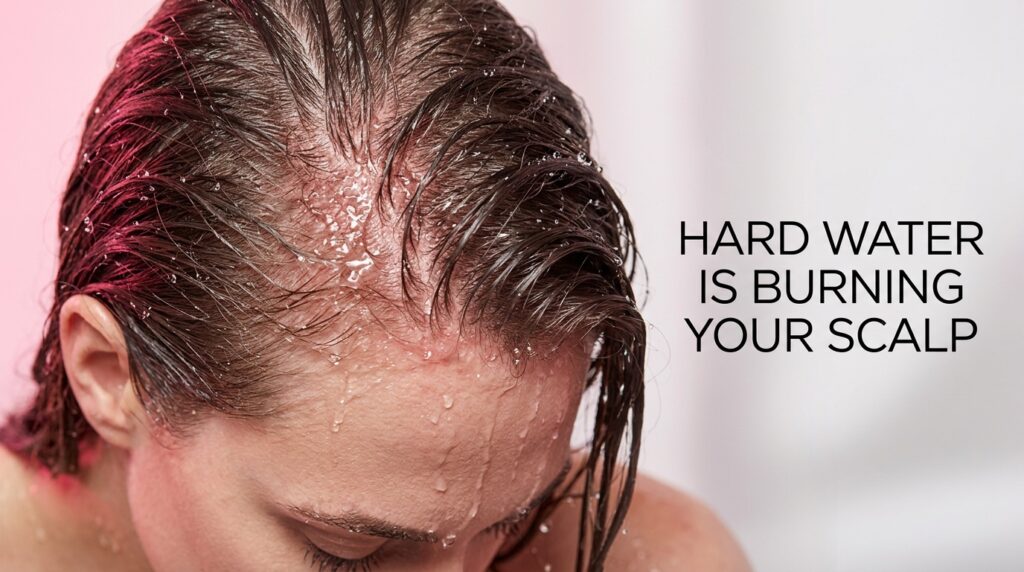
You step out of the shower, rinse, towel off, and then your scalp starts to sting or feel tight and prickly. You are not imagining it. Hard water is a common and often overlooked reason for that burning feeling after a hair wash.
What Hard Water Actually Does to Your Scalp and Hair
Hard water contains high levels of dissolved minerals, especially calcium and magnesium. Cities and towns in northern and western India, such as Delhi, Gurugram, Jaipur, and parts of Mumbai and Pune, are known for having hard water. If you’ve recently moved from a coastal or softer-water location, the difference can be striking.
Here’s a quick rundown of what occurs: Hard water doesn’t let your shampoo lather well. As a result, you end up using more. The minerals then interact with the surfactants in your shampoo, leaving a thin, chalky film on your scalp and hair instead of rinsing off completely. This film holds onto residue, slightly clogs follicles, throws off your scalp’s pH balance, and can lead to real irritation. That burning or stinging you feel when exposed to the sun or humid conditions is your scalp’s response to this residue and the disruption of its natural barrier.
Your hair likely isn’t faring much better. Hard water leaves it feeling rough, coated, and tangled. Colour treatments fade faster, and keratin or smoothening processes may deteriorate more quickly. It is quite disruptive.
Step One: Confirm Hard Water Is the Problem
Before you decide to change your entire routine, it’s smart to perform a quick test. Fill a clear bottle with your tap water, add some liquid soap, and shake well. If you see little lather and the water turns milky or cloudy, you are likely dealing with hard water. TDS (Total Dissolved Solids) strips available online can provide further confirmation. A reading above 300 ppm indicates hard water, and levels between 400 to 700 ppm are common in Indian cities.
How to Wash Your Hair When You Have Hard Water
Adjusting your washing routine is essential. Here’s what you can do:
- Pre-rinse with filtered or previously boiled, cooled water if possible. Doing this even once a week can make a difference. Investing in a showerhead filter to reduce mineral content is one of the best steps you can take. They are easily attachable and available online across different price ranges, from budget to mid-range.
- Use a chelating or clarifying shampoo weekly. Chelating shampoos are designed to bind to mineral deposits and remove them from your scalp and hair. They work differently than regular clarifying shampoos, which are more focused on product buildup. Check out the Wella System Professional range for mineral removal or Schwarzkopf Professional‘s BC Bonacure and Fibre Clinix lines for scalp-cleansing options.
- Don’t skip the scalp massage during shampooing. Using your fingertips, massage the shampoo into your scalp in gentle circles for at least a minute. This action helps to break up the mineral film. Keep nails away from your scalp.
- Rinse longer than you think you need to. Due to hard water, rinsing isn’t very efficient. After you think you’re done, count to thirty and rinse a little more.
- Use an acidic rinse weekly. A diluted apple cider vinegar rinse (one tablespoon to one cup of water) or a citric acid rinse can help neutralize alkaline mineral residue and restore your scalp’s pH. Leave it for two minutes and then rinse it out. Stick to doing this once a week.
The Right Shampoo and Conditioner for Hard Water
Your choice of everyday shampoo is important. Heavy, creamy shampoos can exacerbate the issue when combined with mineral buildup. Opt for a lighter shampoo that balances the scalp rather than simply conditioning the lengths.
Kérastase Specifique focuses on scalp health. The Bain Divalent or other scalp-specific products in this line are worth considering if you struggle with oiliness and scalp sensitivity, a common combination in hard water conditions. Professional-grade options are available at authorised Kérastase salons or retailers.
When using conditioner, apply it from mid-lengths to ends only. Conditioning your scalp when dealing with hard water can lead to more buildup and irritation. Leave the conditioner in for a few minutes before rinsing it thoroughly.
Scalp Serums and Treatments That Help
If your scalp feels inflamed or burns, a specialized scalp serum can offer relief. Look for ingredients like salicylic acid for gentle exfoliation, zinc, or soothing botanical extracts. Apply these before shampooing as a pre-wash treatment, or opt for a leave-in serum formulated for the scalp.
Incorporating a weekly scalp mask or scrub can also be beneficial. Gentle physical exfoliation every ten to fourteen days can help manage mineral and product residue before it leads to inflammation.
Who Should Skip the DIY Route and See a Dermatologist
Scalp discomfort from hard water is common but could also indicate issues like contact dermatitis, seborrhoeic dermatitis, psoriasis, or fungal infections. If your symptoms are severe, involve thick and crusty flakes rather than fine dandruff, or if you notice patchy hair loss, consult a dermatologist. If after adjusting your routine over two to three weeks things don’t improve, it’s time to seek a professional’s opinion rather than experimenting further on an irritated scalp.
Be cautious if you’ve recently had chemical treatments like keratin, smoothening, or colouring. Combining a sensitised scalp post-treatment with hard water irritation can escalate issues quickly. Use gentle, pH-balanced cleansers, and have a professional evaluate your scalp before attempting any exfoliation.
Longer-Term Changes Worth Making
Installing a shower filter is the most effective long-term solution. While it won’t eliminate all minerals, it significantly reduces them. Look for filters that mention calcium and magnesium reduction rather than just sediment filtration.
Try to wash your hair less frequently. Washing often with hard water becomes a cycle: more washing leads to more residue, resulting in a more irritated scalp and, eventually, oilier hair. Extend the interval between washes and use a light, alcohol-free dry shampoo on the roots if needed.
Using filtered or previously boiled, cooled water for your final rinse is a simple method but effective. Many people who’ve dealt successfully with hard water swear by this, particularly for colour-treated hair.
FAQs
Can hard water cause hair fall?
While hard water isn’t a direct cause of clinical hair fall, it can contribute to scalp inflammation, follicle clogging, and brittle strands, all of which may increase shedding. If you’re experiencing significant hair loss, a dermatologist can help determine if hard water is a factor or if there are other causes.
Which shampoo is best for hard water in India?
Chelating shampoos used weekly are most effective for removing minerals. Professional ranges like Wella System Professional, Schwarzkopf Professional, and Kérastase offer scalp-health focused options suited for hard water conditions. For daily use, select a lighter, balancing shampoo over a heavy, moisturising one.
Does a showerhead filter actually make a difference for hair?
Yes, it typically does. A good showerhead filter that targets calcium and magnesium can reduce mineral concentration before the water reaches your scalp. Results aren’t immediate, but after consistent use over two to four weeks, most people notice a significant difference and tend not to revert back to unfiltered water.