Hair fall is a concern for women. When hormones are involved it can feel really frustrating. Hormones help control hair growth. Even small changes in hormone levels can affect hair health.
Hormonal hair loss can happen at stages of life. This includes puberty, pregnancy, postpartum recovery and menopause. Some medical conditions can also disrupt hormone balance. This can lead to excessive hair shedding or thinning.
Understanding hormones and hair growth helps women identify causes. They can seek treatment when needed.
How Hormones Affect Hair Growth
Hair grows in a cycle. This cycle includes:
• Growth phase (anagen)
• Transition phase (catagen)
• Resting phase (telogen)
Hormones help control this cycle. When hormone levels become imbalanced hair follicles may spend time growing and more time shedding.
This can lead to:
• More hair fall
• Slower hair growth
• Thinner hair
• Hair volume
Common Hormonal Causes of Hair Fall in Women
Polycystic Ovary Syndrome (PCOS)
PCOS is a common hormonal condition. It is linked to hair thinning. Women with PCOS may have levels of androgens. These are often called hormones.
Symptoms of Polycystic Ovary Syndrome or PCOS can be really tough to deal with. They may include:
• Hair that is thinning on the scalp
• Getting acne
• Having periods
• Excess hair on the face or body
• Gaining weight
When people with PCOS experience hair loss it usually looks like the hair is thinning. This hair thinning often happens around the crown and the top of the scalp, with PCOS.
Pregnancy and Postpartum Hormonal Changes
Pregnancy causes hormonal changes. Many women notice hair during pregnancy. This is because estrogen levels are high. They keep more hair follicles growing.
After childbirth hormone levels start to return to normal. This can trigger increased shedding. This is commonly known as postpartum hair fall.
In cases this type of hair loss is temporary.
Menopause
Menopause brings hormonal changes. This includes a decline in estrogen levels. As estrogen decreases some women may notice:
• Hair thinning
• Reduced hair density
• Slower hair growth
• Increased shedding
Hair may also become finer and less voluminous over time.
Thyroid Disorders
The thyroid gland helps control metabolism. It also helps with body function.
Both hypothyroidism and hyperthyroidism can disrupt the hair growth cycle. They can contribute to shedding.
Other symptoms may include:
• Fatigue
• Weight changes
• Mood changes
• skin
Hormonal Changes from Birth Control
Some women may notice hair changes. This happens when they start, stop or switch contraceptives.
People are different when it comes to how their bodies react to hormones. Some people do not have any problems, with their hair because of hormones.
Symptoms of Hormonal Hair Loss
Hormonal hair loss usually happens slowly over time. Some common signs of hair loss include:
• Increased hair shedding
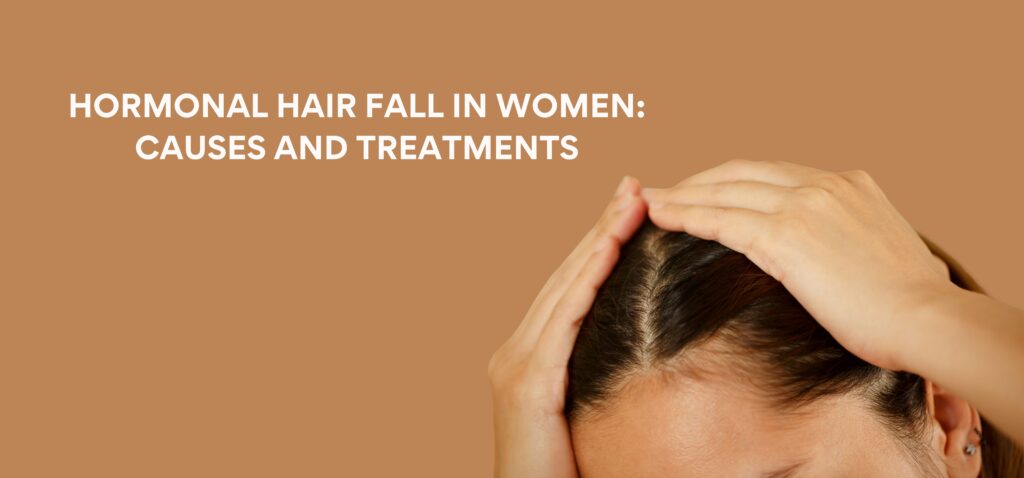
• Hair thinning around the crown
• Widening part line
• Reduced ponytail thickness
• hair growth
Unlike some forms of hair loss hormonal hair fall usually causes diffuse thinning. It does not cause bald patches.
How Is Hormonal Hair Loss Diagnosed?
A doctor will probably look at the hair loss to see what is going on. They will want to know some things about the person with hair loss. The doctor may look at the things:
• The persons medical history
• The persons menstrual history
• If anyone, in the persons family has had hair loss
• The doctor will do an examination
• The doctor will also do blood tests to check for hair loss.
Blood tests may help assess:
• Thyroid hormone levels
• Iron levels
• Hormone levels
• Vitamin deficiencies
Identifying the underlying cause is important. It helps choose the treatment approach.
Treatment Options for Hormonal Hair Fall
Treat the Root Cause
Dealing with the root cause is usually what we do.
Here are some examples:
• Treating PCOS
• Fixing thyroid issues
• Addressing deficiencies
• Managing menopause symptoms properly
We focus on PCOS to treat PCOS.
We look at thyroid problems to treat thyroid problems.
Hair growth and improvement often happen slowly over time. This occurs when hormone levels become more balanced.
Maintain a Balanced Diet
Hair follicles need nutrients to work properly.
Focus on foods that’re rich in:
• Protein
• Iron
• Zinc
• Vitamin D
• Healthy fats
• Fruits and vegetables
Eating a nutritious diet helps your hair stay healthy.
Get Enough Protein
Your hair is mostly made of a protein called Keratin.
Foods that are high in protein include:
• Eggs
• Fish
• Chicken
• Lentils
• Beans
• Dairy products
Eating protein helps your hair grow.
Manage Stress
Stress can make hair shedding worse.
Some helpful ways to manage stress are:
• Exercise
• Yoga
• Meditation
• Deep breathing exercises
• Getting sleep
Reducing stress may help your hair stay healthy.
Practice Gentle Hair Care
Avoid using much:
• Heat styling
• Tight hairstyles
• Chemical treatments
These habits can cause your hair to break. They can make thinning hair look worse.
Medical Treatments
Depending on why you’re losing hair a doctor may suggest treatments. These treatments help your hair grow. They can also fix imbalances.
Treatment plans are different for everyone. They depend on what you need and whats causing your hair loss.
Always follow a doctors advice, about treatment options.
Can Hormonal Hair Loss Be Reversed?
In cases yes.
The possibility of regrowth depends on:
• The underlying cause
• How early treatment begins
• Overall health
• Individual response to treatment
Some women experience improvement. This happens after addressing imbalances. Others may require management.
When to See a Doctor for Hair Loss
You should think about seeing a doctor if you have:
• My hair is thinning and it just will not stop
• I am seeing a big increase in the amount of hair I am losing all of a sudden
• I lose hair around the time I have my periods
• I have symptoms that make me think I might have thyroid problems
• I see signs that my body’s not right and things are out of balance, with my hair loss and my body
You should also see a doctor if your hair thinning or loss does not get better.
Hair loss can be caused by things.
The hair loss could be due to thyroid issues.
You need to see a doctor, about hair loss and thyroid disorders.
The doctor will check for hair thinning and hair shedding.
Early evaluation can help identify the cause. It can improve treatment outcomes.
Lifestyle Tips, for Healthier Hair
Stay Hydrated
We need to drink plenty of water because it helps our body and scalp work properly.
Exercise Regularly
We should exercise every day because physical activity helps us feel good and keeps our hormones in check.
Prioritize Sleep
We have to get sleep because it helps our hormones stay balanced and our body recover from the day.
Avoid Crash Diets
Extreme calorie restriction may contribute to hair shedding.
A balanced approach to nutrition is generally better for long-term hair health.
Final Thoughts
Hormonal hair fall in women can occur due to conditions like PCOS. It can also happen due to thyroid disorders, pregnancy, postpartum changes, menopause and other hormone-related factors.
The encouraging news is that many cases of hair loss can be managed successfully. This happens when the underlying cause is identified and treated. A combination of guidance, proper nutrition, stress management and gentle hair care can help support healthier hair growth.
Disclaimer
This article is for information purposes only. It is not meant to be taken as advice. Hair loss that is related to hormones can have a lot of causes. These causes may require a doctor to take a look. If you are dealing with hair loss you should go see a healthcare provider. They can figure out what is going on and give you treatment recommendations that’re just for you the person, with hormonal hair loss.
Frequently Asked Questions (FAQs)
1. What is the common hormonal cause of hair loss in women?
PCOS, menopause, thyroid disorders and postpartum hormonal changes are among the common hormonal causes of hair fall in women.
2. Can hormonal hair loss grow back?
In cases hair can regrow once the underlying hormonal imbalance is properly managed and treated.
3. How do I know if my hair loss is hormone-related?
Hair loss accompanied by symptoms like periods, acne, weight changes, menopause symptoms or thyroid issues may suggest a hormonal cause.
4. Does menopause cause hair thinning?
Yes. The decline in estrogen levels during menopause can contribute to hair thinning, reduced density and slower hair growth.
5. Should I see a doctor, for hair loss?
Yes. A healthcare professional can help identify the underlying cause. They can recommend treatment options.