When you try a skincare product it can be really exciting. You are hoping that your skin will look clearer, brighter and healthie. Sometimes even products that get great reviews can cause problems like irritation, redness and breakouts.
That is why patch testing is such a step before you start using a new skincare product. It is a way to check how your skin will react to a product before you put it all over your face.
Lets talk about what patch testing’s why it is important and how to do it the right way.
What Is a Patch Test?
A patch test is when you put an amount of a new skincare product on a tiny area of your skin to see how it reacts. You do not put it on your face right away. Instead you put it on an area like behind your ear or on your jawline and wait to see if your skin gets red or irritated.
This helps you figure out if a product is going to work for you before you use it on your face. It can help you avoid having a reaction.
Why Is Patch Testing Important?
Everyones skin is different. What works for one person might not work for another. That is because we all have skin types, sensitivities and allergies.
Patch testing is especially important if you have skin or if you are using products with strong ingredients. It can help you find out if a product is going to cause problems before you start using it.
Which Skincare Products Should Be Patch Tested?
You should patch test every skincare product you try. This includes things like cleansers, moisturizers, sunscreens, serums, face masks and exfoliants.
Even if a product says it is gentle or good for skin you should still patch test it. You never know how your skin is going to react.
Common Ingredients That May Cause Reactions
Some ingredients in skincare products can cause problems for some people. These include things like fragrances, essential oils and strong acids.
It does not mean these ingredients are bad it just means they might not be right for everyone. If you have skin you might need to be extra careful when using products with these ingredients.
Where Should You Patch Test?
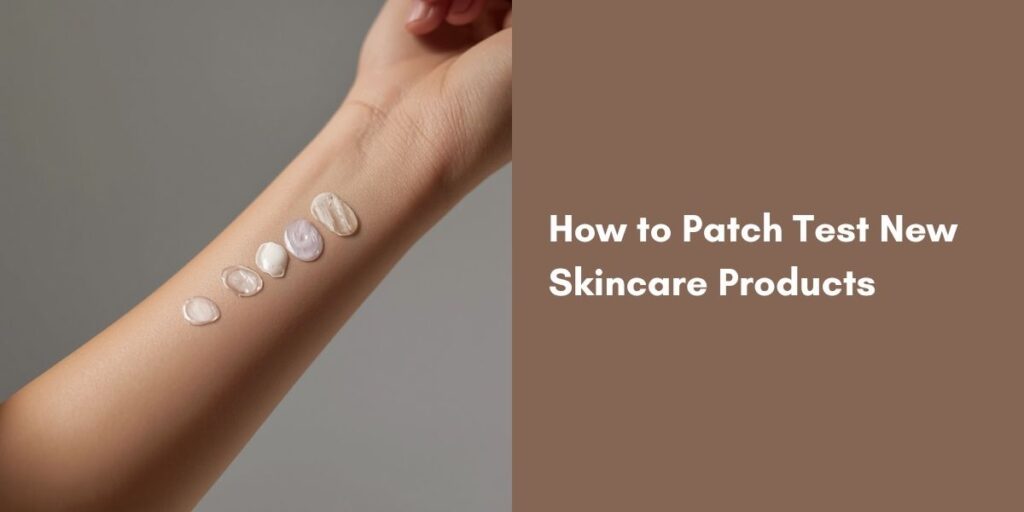
You should patch test on an area of skin that is not too noticeable. Some good places to patch test are behind your ear on your jawline or on the inside of your forearm.
These areas are good because they are easy to hide and you can easily see if your skin is getting red or irritated.
How to Patch Test a New Product
To patch test a product you should follow these steps:
Step 1: Clean the Area
First you need to wash the area you are going to patch test with a cleanser. Then pat it dry with a towel.
Step 2: Apply a Small Amount
Next you put an amount of the product on the area you cleaned. You do not need to put a lot on a tiny bit.
Step 3: Leave the Product On
Then you leave the product on for a while. If it is a moisturizer or serum you leave it on all day. If it is a cleanser you use it like you normally would.
Step 4:. Observe
After you apply the product you need to wait and see how your skin reacts. You should check the area after 24 hours. Again after 48 hours. If you have skin you might want to wait 72 hours.
What Reactions Should You Watch For?
When you are patch testing you need to watch for signs that the product is not agreeing with your skin. These signs include redness, itching, burning and swelling.
If you see any of these signs you should stop using the product away.
What If Nothing Happens?
If you do not see any signs of irritation after you patch test a product it is probably safe to use… It is still possible that you might have a reaction later on.
Some reactions do not show up away they might take a few days or even weeks to appear.
Patch Testing Ingredients
If you are using a product with strong ingredients like retinoids or exfoliating acids you need to be extra careful. These ingredients can be really good for your skin. They can also cause irritation.
You should start with an amount and gradually increase as your skin gets used to it.
Common Patch Testing Mistakes
There are a few mistakes people make when they are patch testing. One mistake is testing many products at the same time. This can make it hard to figure out which product is causing the problem.
Another mistake is not waiting enough to see how your skin reacts. Some reactions take a while to show up so you need to be patient.
Who Should Always Patch Test?
Some people should always patch test skincare products. These include people with skin people with rosacea and people who have had bad reactions to products in the past.
If you have skin you need to be extra careful when trying new products.
Can Patch Testing Prevent Allergic Reactions?
Patch testing can help you figure out if a product is going to cause a reaction but it is not a guarantee. Sometimes reactions can still happen even if you patch test.
Patch testing is still a good way to reduce the risk of having a bad reaction.
When Should You Seek Advice?
If you have a reaction to a skincare product you should seek medical advice. Signs of a reaction include severe swelling, redness and difficulty breathing.
If you experience any of these symptoms you should go to the doctor away.
Final Thoughts
Patch testing is a step you can take to protect your skin from bad reactions. It is easy to do. It can save you a lot of trouble in the long run.
Whether you are trying a moisturizer, serum or sunscreen patch testing can help you figure out if it is going to work for you. So take the time to patch test products and keep your skin safe.
Disclaimer
This article is for information and it is not meant to be taken as medical advice. If you have concerns about your skin or skincare products you should talk to a dermatologist or healthcare professional.
Asked Questions (FAQs)
1. How long should I patch test a skincare product?
You should patch test a skincare product for least 24 to 48 hours. If you have skin you might want to wait 72 hours.
2. Where is the best place to patch test skincare products?
The best places to patch test skincare products are behind your ear on your jawline or, on the inside of your forearm.
3. Can I skip patch testing if a product is labeled for skin?
No you should still patch test even if a product is labeled for skin. Everyones skin is different. What works for one person might not work for another.
4. What should I do if my skin reacts during a patch test?
If your skin reacts during a patch test you should stop using the product and talk to a dermatologist or healthcare professional.
5. Do I need to patch test every skincare product?
Yes you should patch test every skincare product to reduce the risk of irritation and bad reactions.