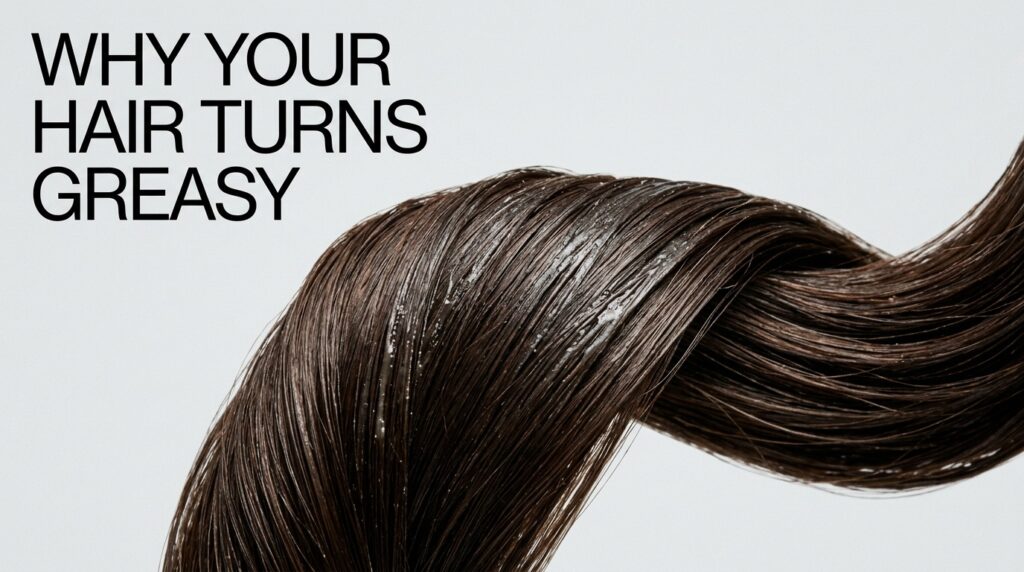
You’ve invested in Olaplex No.4 and No.5, eager to experience their bond-building benefits, yet just a day or two later, your hair seems like it hasn’t been washed for a week. You’re not alone in this experience. Many Indian readers transitioning to salon-grade haircare face this problem due to not adjusting their application techniques. Luckily, understanding the issue leads to a straightforward solution.
Understanding Olaplex: What It Is and Isn’t
Olaplex No.4 Bond Maintenance Shampoo and No.5 Bond Maintenance Conditioner are crafted to extend the bond-repair benefits of No.3 and other in-salon treatments. These formulas are richer and more conditioning than typical clarifying or volumising shampoos. This richness is intentional, but it demands proper alignment of your hair, scalp, and application techniques, or it may leave your hair greasy and weighed down.
These products aren’t your everyday drugstore shampoos. They behave uniquely and demand a slightly altered approach, especially in Indian conditions.
Challenges of Indian Hair and Scalp Conditions
Indian environmental factors often exacerbate the issue, so it’s vital to consider these before addressing solutions.
- Hard water: Many Indian cities, particularly Delhi, Bangalore, Chennai, and Mumbai, struggle with hard water. This leaves mineral deposits on your scalp and hair. Combining these deposits with a rich, conditioning shampoo congests the scalp, making hair appear greasy faster.
- Humidity: Coastal areas and the monsoon season create high humidity that makes hair feel heavier and oilier soon after washing.
- Naturally thicker, denser hair: Indian hair often tends to be thicker and coarser. Such rich conditioners can overwhelm hair that doesn’t require deep conditioning at the roots.
- Pollution: Dust and pollutants mix with sebum on the scalp, giving a “dirty” feeling just 24 to 48 hours post-wash.
Why Olaplex 4 and 5 Might Be Making Your Hair Greasy
1. Too Much Conditioner Usage
No.5 is a rich conditioner, and applying it near the roots, especially when Indian hair naturally leans oilier at the scalp, is a common mistake. Even a minimal amount at the scalp can clog follicles and boost oil production. Most people use more conditioner than necessary.
2. Insufficient Rinsing
Though basic, this step is often overlooked. Conditioning formulas require at least 60 to 90 seconds of thorough rinsing. Hard water complicates this, as it doesn’t clear product away as soft water does. Any residue on the scalp draws dirt and sebum quickly.
3. Buildup from Prior Washes
Without a clarifying wash, using No.4 and No.5 over weeks can result in significant buildup. Instead of stripping buildup, these rich shampoos may add to it if your scalp wasn’t initially clean. This issue often arises when switching from a strong sulfate shampoo to a milder one without a proper reset.
4. No.4 Might Be Too Gentle for Your Scalp
If your scalp is oily, a gentle bond-maintenance shampoo may not suffice. Some individuals need a stronger cleanse, which is perfectly normal. Consider a mild clarifying shampoo weekly or biweekly before switching to No.4 for subsequent washes.
5. Overusing No.3
Olaplex No.3 is a pre-shampoo treatment rather than a leave-in. Overuse without complete washing, or combining it with No.5 on healthy hair, leads to excess conditioning that your hair might not require.
Solutions: Adjustments to Make
- Begin with a clarifying wash. Before your next Olaplex wash, use a clarifying or anti-residue shampoo to clear scalp and strand buildup. This sets a clean base, done every two to four weeks depending on your scalp’s oiliness.
- Shampoo twice. The first round of No.4 removes oil and product; the second one cleanses. Adding a second lather can make an immediate difference if previously doing only one.
- Apply No.5 from mid-length to ends only. Keep it inches away from your scalp. For dry ends, apply more there as your roots don’t need conditioner.
- Rinse longer than expected. Spend at least 90 seconds rinsing out the conditioner. A shower filter is advantageous, especially with hard water. Finish with a cool rinse to lock in cuticle.
- Alternate your shampoos. Use a clarifying shampoo weekly, then No.4 mid-week if required. No.4 excels as a secondary shampoo, but may not work as the main cleanser for oily scalps.
- Reduce the amount of No.5. For shoulder-length hair, a ten-rupee-coin-sized amount suffices. For longer hair, go up to a fifty-paise-coin size. Less is truly more with rich conditioners.
Who Might Want to Avoid Olaplex No.4 and No.5
Consider this honestly. If your scalp is constantly oily, you wash frequently, and your hair isn’t colour-treated, bleached, or processed, you likely don’t need a bond-maintenance regimen. Olaplex 4 and 5 cater to damaged hair. Healthy, untreated, oily scalp hair may find this duo too intense.
In such cases, consider a clarifying shampoo with a lightweight, rinse-out conditioner, or a volumising one applied only to the ends. Save Olaplex for when bond support is necessary.
Addressing Hard Water and Shower Filters
If residing in a hard water city, investing in a shower filter is worthwhile. Hard water deposits calcium and magnesium on the scalp, exacerbating the heaviness of conditioners and scalp oiliness. Inline shower filters come in various price ranges and can greatly impact how any product, not just Olaplex, performs on your hair.
FAQs
Can I use Olaplex No.5 every time I wash my hair?
For oily or normal scalps, using No.5 with every wash might be excessive. Try applying it every other wash, strictly from mid-length to ends, to see if greasiness reduces. It’s fine to use it more often on very dry or heavily processed hair if kept away from the scalp.
Is Olaplex No.4 safe for daily use on Indian hair?
It’s gentle enough for frequent use, but for oily scalps, it may not cleanse thoroughly. Alternating with a clarifying shampoo weekly yields better results for many Indian scalps, particularly in humid cities or during the monsoon.
Why does my hair feel greasy even after using Olaplex in hard water areas?
Mineral deposits from hard water hinder proper rinsing and prompt faster oil production from the scalp. Consider a shower filter, perform a clarifying wash before your Olaplex routine, and extend rinsing time. An occasional apple cider vinegar rinse diluted in water can also help clear scalp mineral buildup.