Your retail shelf is one of the most underused revenue streams in an Indian salon. Clients already trust you with their hair and skin, so when you recommend a product they can take home, they listen. The challenge is knowing which products actually move, which ones clients come back to repurchase, and how to avoid stocking a shelf that just collects dust. Here is a practical, honest guide to the professional product categories that consistently sell well in Indian salons, with brand examples and a few honest notes on where things can go wrong.
Why Retail Works Differently in Indian Salons
Indian clients are value-conscious. They will not pick up a product just because it looks good on a shelf. They buy it because their stylist or esthetician told them exactly why they need it and showed them results in the chair. That is your biggest advantage over an e-commerce page.
Indian hair and scalp conditions also create very specific retail opportunities. Hard water in cities like Delhi, Bengaluru and Mumbai causes mineral buildup and dullness. High humidity during the monsoon triggers frizz and fungal scalp issues. Pollution in metro areas weakens the hair shaft over time. If your retail recommendation speaks directly to one of these real, daily frustrations, the sale happens naturally.
Professional Shampoos and Scalp Treatments
This is your highest-turnover retail category. Clients run out of shampoo every few weeks, which means repeat purchases and a reason to return to you rather than an online marketplace.
L’Oréal Professionnel has a broad range covering everything from colour protection to scalp care, and the brand recognition alone helps with first-time retail sales. Their scalp-focused lines tend to do well in Indian salons where clients complain about dandruff, oiliness or hair fall after chemical services. Matrix sits at a more accessible price point and is often the smarter choice for salons in Tier 2 and Tier 3 cities, where clients are open to professional products but price-sensitive about it.
Kérastase shampoos are a genuine bestseller in premium salons. They are not cheap, but clients who are introduced to the Nutritive or Bain ranges during a hair spa service often repurchase without much prompting. The texture and fragrance do a lot of the selling for you.
Skip it if: your client has a sensitive or reactive scalp and has never used the product before. Always do a brief scalp check before recommending, and tell clients with known allergies or dermatitis to check with their dermatologist before switching products.
Hair Masks and Conditioning Treatments
Masks are an easier retail pitch than most stylists realise. If you use one during a hair spa service and the client feels the difference, you have already done the selling. All you have to do is hand them the product and say, “Use this once a week at home.”
Wella Professionals mask ranges are reliable mid-range options that work across a wide variety of Indian hair textures, from fine straight hair to thick, coarse or chemically treated hair. Kérastase masks in the Nutritive and Resistance lines are consistent bestsellers in urban salons, particularly for clients who colour frequently or use heat tools regularly.
For clients with dry or frizz-prone hair, a leave-in conditioning cream or serum paired with a mask dramatically improves their at-home results. Bundling a mask with a leave-in is a simple upsell that also genuinely helps the client.
Scalp Serums and Targeted Treatments
Scalp health is a growing conversation in Indian salons, and rightly so. Hard water deposits, excess sebum in humid weather and stress-related hair fall have pushed many clients to look for something more targeted than a shampoo.
Professional scalp serums, whether focused on strengthening, soothing or managing oiliness, are a strong retail category right now. L’Oréal Professionnel’s scalp-focused offerings and Kérastase’s Specifique range address several of these concerns. These sell best when you do a brief scalp analysis at the beginning of the service and point to what you actually found. “Your scalp is a little flaky at the crown, this serum will help between visits” is far more convincing than any shelf talker.
One honest note: scalp serums are not a substitute for medical treatment. If a client has significant hair loss, visible scalp inflammation or suspected fungal infection, refer them to a dermatologist. Your credibility depends on knowing when a product helps and when a doctor is needed.
Professional Skincare for Salon Retail
Many hair salons underestimate how well skincare sells when the setup is right. Clients sitting under a dryer or waiting between colour processing stages are a captive audience. If they see results from a facial or cleanup service, they are open to taking something home.
O3+ is a brand that has earned genuine trust in the Indian professional skincare market. Their ranges cover acne-prone skin, brightening, anti-ageing and sensitive skin, which maps neatly onto the most common skin concerns Indian clients walk in with. The professional line is what you use in your facial service; the retail line gives clients a simplified version of that routine to maintain at home.
For skincare retail to work, keep it simple. A three-step home routine, cleanser, treatment and moisturiser, is far easier for a client to commit to than a seven-step system. Recommend only what they genuinely need based on their skin type and the service they just had.
A note on chemical exfoliants and peels: if you are retailing any products that contain AHAs, BHAs or retinoids, brief clients clearly on sun protection, frequency of use and the fact that these are active ingredients. Never make medical claims, and always advise clients with sensitive or reactive skin to patch test and consult a dermatologist if they are unsure.
Heat Protection and Styling Products
This is a category with a loyal repeat buyer, because clients genuinely run out of these products and they see immediate results when they use them. Heat protectant sprays and serums are an easy retail conversation after any blowdry or straightening service.
Wella Professionals and L’Oréal Professionnel both have styling and finishing ranges that work well in Indian humidity. The key selling point is real: Indian clients who use flat irons or blow dryers without heat protection are causing cumulative damage that shows up as breakage and dullness over time. You are not upselling; you are advising.
For Salon Professionals
Building a Retail Strategy That Actually Works
The single biggest mistake salon owners make with retail is buying too much variety and too little depth. Ten products from five different brands looks impressive but sells poorly. Pick two or three brands you genuinely believe in, learn the ranges well, and stock two or three units of each product. You can always reorder fast-moving items. Unsold stock sitting on a shelf for months is a cash flow problem.
Consultation as the Foundation of Every Sale
Train your team to do a brief consultation before every service, hair and skin type, current concerns, products they are using at home. This is not just good practice; it is your retail intelligence. When a stylist knows a client is using a supermarket shampoo on colour-treated hair, the recommendation writes itself. Role-play these conversations with junior staff. The recommendation should never sound like a pitch. It should sound like a senior stylist telling a friend what they actually need.
Service Menu Integration
Build retail into your service menu language. If you offer a “Hard Water Repair Hair Spa,” the retail recommendation at the end is a chelating or clarifying shampoo to maintain the result. If you offer an “O3+ Brightening Facial,” the retail link is the home-maintenance cleanser and SPF. When the product is positioned as the maintenance step for a service the client already paid for and enjoyed, the conversation is far less awkward.
Pricing and Display
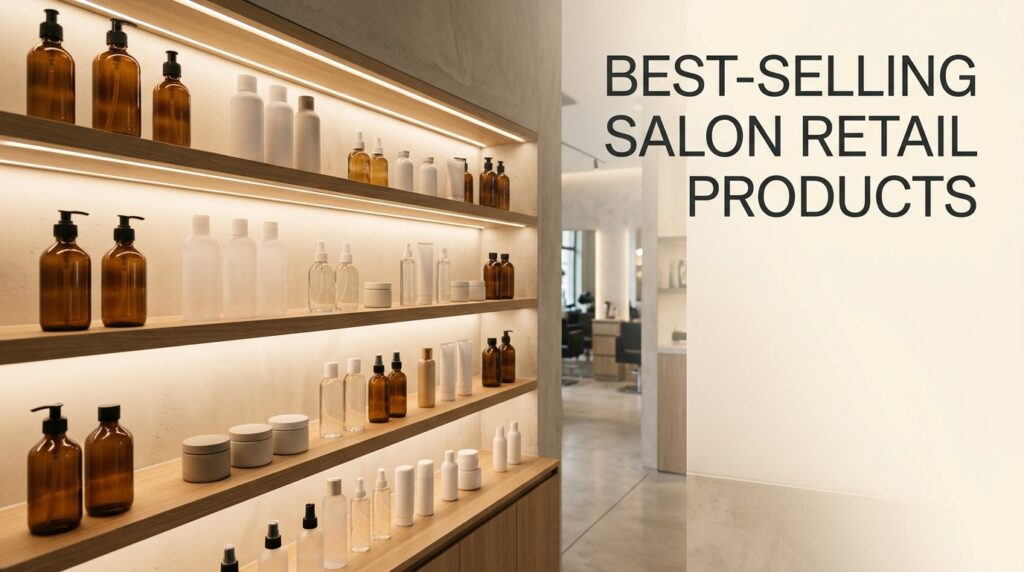
Professional retail products in India vary widely in price, roughly from INR 400 to INR 5,000 or more depending on the brand, product type and city. Do not compete with online prices. Compete on advice, demonstration and trust. Clients who buy from you are buying your expertise alongside the product. Make that clear with simple shelf talkers that explain what each product does in one sentence, written in the same language your team uses with clients.
Patch Tests and Safety Protocols for Retail Recommendations
For any product with active ingredients, whether a scalp serum, a chemical exfoliant or a colour-protecting treatment, brief clients on how to patch test at home. Keep a simple card at the checkout counter that outlines this. It protects your clients, reduces the chance of a bad reaction being blamed on your recommendation, and positions your salon as one that takes safety seriously. For chemical services in the salon itself, your team should be following patch test protocols as standard, not as an optional step.
Tracking What Sells and What Sits
Review your retail sales every month. If a product has not moved in sixty days, it is either stocked in the wrong salon or being recommended poorly. Find out which. Talk to the brand’s sales representative about return or exchange policies, and do not be afraid to rotate out a product that genuinely does not suit your client base. Your shelf should reflect your clients, not a wholesale order you felt pressured into.
FAQs
Which professional haircare brands are best for Indian salon retail?
L’Oréal Professionnel, Kérastase, Matrix and Wella Professionals are consistently strong sellers across Indian salons at different price points. The right choice depends on your salon’s positioning and your client base. Matrix works well in value-conscious markets; Kérastase suits premium urban salons. Stock what you genuinely use and believe in.
How do I convince clients to buy products from my salon instead of online?
By making the recommendation personal and specific. “This mask is exactly what your hair needs after today’s colour service, use it Sunday night” is far more persuasive than a generic suggestion. Clients also buy from salons because they trust the advice is tailored to them, something no website can replicate. Back up your recommendation with a visible result in the chair.
Is O3+ suitable for home use or only for salon treatments?
O3+ has both a professional range used in salon treatments and a retail range designed for home use. The home-use products are generally formulated for safe self-application and are a practical way for clients to maintain the results of their salon facial. Always recommend the specific product suited to your client’s skin type, and advise a patch test before first use, especially for clients with sensitive skin.