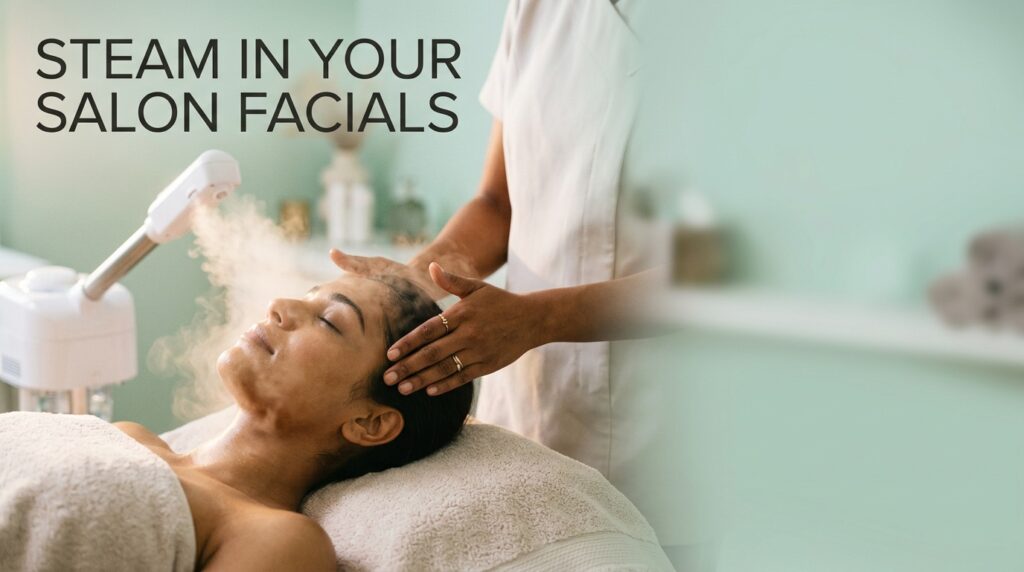
Steam has long been a key component of traditional facials, and its popularity is well-deserved. It helps to soften sebum plugs, prepares the skin for extractions, and enhances the absorption of active ingredients. However, in modern advanced training settings, the conversation has evolved. Steam is seen as a valuable tool that must be used judiciously, understanding when to set it aside is as crucial as mastering its application.
What a Facial Steamer Actually Does to the Skin
When the face is exposed to warm, moist vapour, several processes occur. The outer layers of the stratum corneum take in moisture and slightly swell, softening the keratin plug within a pore. This change makes extractions, whether manual or vacuum-assisted, far less traumatic for the skin. It also slightly boosts blood circulation, leaving clients with the temporary rosy glow that they often associate with a “good facial.”
Steaming temporarily increases the skin barrier’s permeability, allowing serums, ampoules, or treatment masks applied shortly after to penetrate more effectively. That’s why seasoned estheticians use steam before applying actives, not the other way around.
However, one thing steam does not do is permanently shrink or open pores. Pores lack muscles and while steam can make their contents easier to extract, pore size is fundamentally genetic and structural.
When Steam Is a Clear Yes
For certain client profiles, steam is an essential inclusion in the treatment menu.
- Congested or oily skin: Clients dealing with blackheads, whiteheads, and oily skin, especially in humid Indian cities, benefit substantially. Steam softens plugs and reduces manual pressure during extractions, minimizing the risk of post-extraction trauma.
- Thick or dehydrated skin: Skin that feels tight or has a rough texture reacts positively to steam before enzyme treatments or gentle exfoliation.
- Clients in need of deep relaxation: The warmth can be soothing, making steam a delightful addition for clients seeking a classic relaxation facial without specific active issues.
- Pre-extraction preparation: Generally, if planning to perform manual extractions, a brief steam of three to five minutes can significantly reduce trauma compared to working on dry skin.
When to Skip the Steamer Entirely
This is where a professional’s discretion distinguishes a good esthetician from a truly skilled one. Not every client should undergo steaming, and part of the consultation should actively look out for these contraindications.
- Active rosacea or persistent facial redness: Since heat dilates blood vessels, steaming can induce a flare in clients who already experience redness or have a rosacea diagnosis. Opt for cool or room-temperature towels for cleansing instead.
- Sensitive or reactive skin: For clients with skin that reddens easily, reacts to fragrances, or has a compromised barrier, steam adds unnecessary stress. Choose a gentle, non-thermal protocol instead.
- Active acne with inflamed papules or pustules: Using steam on active, inflamed acne can escalate inflammation and spread bacteria if extractions are not performed properly. Many professionals prefer cool-steam or ultrasonic methods for treating acne-prone skin.
- Very thin or mature skin: Older clients with a thinned barrier and visible capillaries may find prolonged streaming more irritating than beneficial, leading to increased redness and discomfort.
- Respiratory sensitivity or asthma: Close steam exposure can affect breathing, so always check with the client and maintain a comfortable distance regardless.
- Post-peel or post-laser skin: Skin in recovery from chemical peels or laser treatments should not be exposed to steam.
The “Would You Like Steam?” Question
For many seasoned estheticians, this question is standard in their verbal consultations, offering clients an informed choice. It’s a sign of acknowledging diverse skin needs and encourages discussions about potential sensitivities that clients might not mention otherwise.
A straightforward script can be: “During the facial, I use a steamer to aid extractions and absorb products more effectively. Would you prefer we skip it if you have any sensitivity to heat or redness?” This question can uncover issues like rosacea or past negative experiences in other salons that clients might otherwise omit.
Steam Duration and Distance: Getting the Technique Right
The importance of duration and positioning cannot be overstated and are often underrated. A typical mistake is steaming for too long or placing the nozzle too close, which can overhydrate and temporarily weaken the skin barrier.
- Distance: The steamer nozzle should be maintained at least 30 to 35 centimetres from the face to avoid mild thermal discomfort.
- Duration: Three to five minutes suffices for most skin types. For very congested skin, limit it to eight to ten minutes while checking in with the client.
- Eye protection: Always cover the eyes with damp cotton pads or eye pads before steaming to ensure comfort.
- Herb or ozone add-ons: Steamers with ozone functions or baskets for herbs may offer mild antiseptic effects suitable for congested skin, if the client does not have respiratory sensitivities. Be clear about its function and limitations when discussing with clients.
Pairing Steam with the Right Products
Steam creates a brief period of heightened skin absorption. This is ideal for applying treatment serums, enzyme masks, or clay preparations but not heavy, occlusive creams.
O3+ provides professional products like enzyme-based exfoliants and treatment ampoules suitable for post-steam application on congested Indian skin. Known for its peel-off algae mask system, Casmara effectively enhances treatment when used after steaming. Janssen Cosmetics offers ampoules often used by estheticians for specific issues like hyperpigmentation or dehydration post-steam. While these brands work without steam, using them after steaming can optimize the treatment experience when suitable for the client.
Be cautious about applying strong actives like high-percentage AHAs or retinol right after steam, especially on sensitive clients. Increased permeability can heighten irritation risks.
For Salon Professionals
Building Steam Into Your Service Menu and Consultation
For teams standardizing protocols, here’s a framework for discussion.
Consultation form update: Add a steam contraindication checklist to your intake form. This should cover rosacea, respiratory issues, recent procedures, and steam reactions, ensuring legal protection and guiding junior estheticians.
Tiered service design: Offer options like “Classic Facial with Steam” and “Calming Facial” or “Sensitive Skin Facial” on your services menu. This allows clients to self-select and sets appropriate expectations. The calming facial can feature different products, cool towels, and forego steam without extensive explanations.
Retail angle: Clients interested in home steamers should know the risks. Consumer steamers are less controlled than professional ones, and most sensitive clients should use a warm damp towel for a similar softening effect. For clients with oily, congested skin committed to a home routine, suggest a basic home steamer once a week for two to three minutes. Avoid recommending them to those with skin sensitivities.
Team training point: Estheticians must understand that steam is a deliberate choice, not an automatic step. New hires should not assume “that’s just how it’s done.” Prioritize skin-type assessments and protocol customization in training.
Equipment hygiene: Maintaining clean steamers is crucial. Use distilled water to avoid mineral build-up and rinse and dry tanks between sessions. In cities like Delhi, Bengaluru, and Chennai, where hard water is common, using distilled or purified water is essential to prevent contamination.
FAQs
Is facial steaming good for Indian skin during summer and monsoon?
Skin type matters more than the season. In humid months, oily and congested skin may require less steam since humidity is already high. Sensitive or rosacea-prone skin should avoid it year-round in warm conditions. A skilled esthetician will assess based on the client’s current skin needs, not just the season.
Can steaming make acne worse?
Yes, it can. If applied to inflamed pustules and papules, steam may increase redness and discomfort. Incorrect extractions can spread bacteria and cause post-inflammatory hyperpigmentation, a significant concern for Indian skin. For acne treatments, cooler, non-thermal methods are preferable.
How long should a facial steamer be used in one session?
Professionally, three to five minutes is enough, keeping a distance of 30 to 35 centimetres from the face. Exceeding eight to ten minutes can compromise the barrier and irritate. At home, two to three minutes with a warm towel or basic steamer is typically sufficient and safer.