You just walked out of the salon with the smoothest, shiniest hair of your life, and the last thing you want is to watch that result fade in three weeks because of a few avoidable mistakes. Keratin treatments are an investment, especially in Indian conditions where humidity, hard water, and pollution can undo your results faster than anywhere else. Get the aftercare right, and that smoothness can last four to six months. Get it wrong, and you will be back in the salon chair much sooner than you planned.
First, Understand What Just Happened to Your Hair
A keratin treatment works by infusing a keratin-based formula into the hair shaft and sealing it with heat. The bonds are fresh and slightly vulnerable for the first 72 hours after your service. During this window, anything that causes the cuticle to swell or fold, like moisture, friction, or hair ties, can leave permanent kinks or waves in your newly straightened hair. This is not a myth your stylist made up. It is simply chemistry.
After those first three days, the treatment is set. But how you wash, style, and protect your hair from that point forward determines how long the results actually last.
The First 72 Hours: What You Must Not Do
This is the non-negotiable phase. Yes, it feels strict, but skipping these rules is the single biggest reason people complain that their keratin faded fast.
- Do not wash your hair. No matter how much product residue you feel, resist. Water causes the cuticle to swell before the treatment has fully cured.
- Do not tie your hair, clip it, or tuck it behind your ears. Even a gentle elastic can leave an indentation that sets into the treatment permanently.
- Avoid sweating as much as possible. This is genuinely hard in India, especially during summer or monsoon, but salt from sweat can affect the keratin bond. Stay out of intense heat, and definitely skip the gym for three days.
- Stay away from rain and humidity. If you must go out, use an umbrella. Monsoon season and fresh keratin treatments are not friends.
- Do not style with clips or headbands. Sleep with your hair loose and flat on a silk or satin pillowcase if you can.
Switching to a Sulfate-Free Shampoo: Non-Negotiable
Once you are ready to wash, your regular shampoo is off the table. Sulfates, specifically sodium lauryl sulfate and sodium laureth sulfate, are the cleansing agents that make most drugstore and even many salon shampoos lather so aggressively. They are excellent at stripping oils, which is exactly what you do not want after a keratin service. Sulfates will literally wash the treatment out of your hair over time.
Switch to a sulfate-free, sodium-chloride-free shampoo. The sodium chloride part matters too. Salt acts as a filler in some formulas and can break down the keratin bond just like sulfates do. Always check the ingredient list before buying.
Some reliable options available in India that are genuinely worth considering:
- Kérastase Bain Fluidealiste from their Discipline range is one of the most recommended post-keratin shampoos among Indian stylists. It is designed for frizz-prone hair and is free of sulfates and sodium chloride. It is on the pricier side, but a little goes a long way.
- Matrix Biolage Smoothproof Shampoo is a more accessible price point and widely available across Indian cities. It is a solid everyday option for maintaining smooth results without breaking the bank.
- Schwarzkopf Professional BC Bonacure Smooth Perfect Shampoo is another salon-grade option worth asking your stylist about. Good for medium to coarse Indian hair textures.
- Moroccanoil Smoothing Shampoo is a popular choice, especially for clients who also use their signature argan oil line. Just confirm the formula is sulfate-free at the point of purchase, as formulations can vary by batch and market.
If budget is a real concern, look for any salon-grade sulfate-free and salt-free shampoo in the INR 600 to 1,500 range. Prices vary widely by city and retailer, so shop around.
Cowashing: The Secret Weapon Most People Ignore
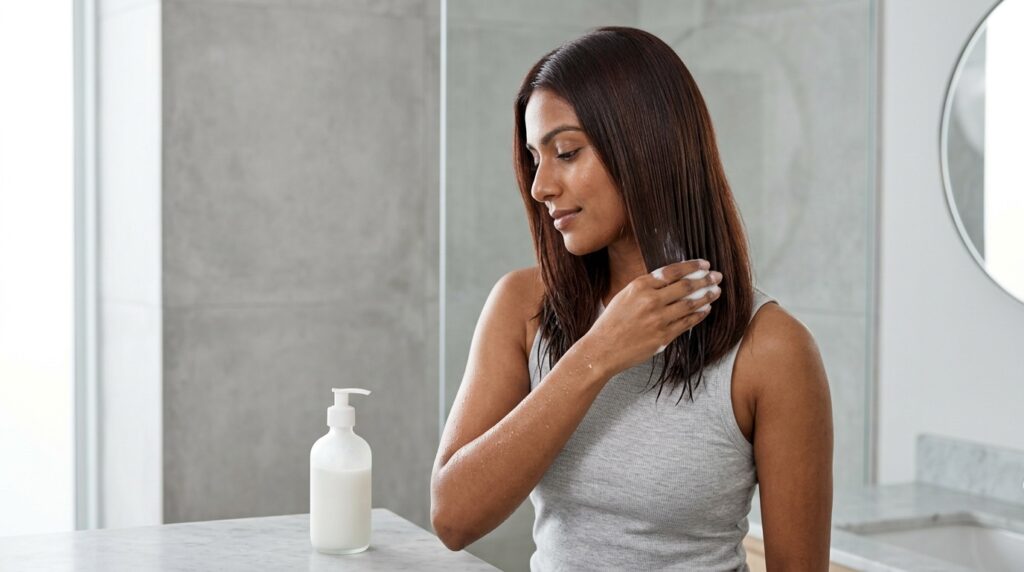
Here is where the real longevity hack is. Cowashing means washing your hair with conditioner alone, skipping the shampoo entirely. It sounds strange if you have never tried it, but it is one of the most effective ways to extend your keratin results, especially for people who feel the need to wash their hair every day or every other day.
Indian hair, particularly in humid cities like Mumbai, Chennai, or Kolkata, often gets oily at the roots and frizzy at the ends simultaneously. The temptation is to shampoo daily. Every time you shampoo, even with a sulfate-free formula, you are gently loosening the treatment over time. Cowashing cleanses the scalp of light buildup and refreshes the hair without disturbing the keratin layer at all.
How to cowash properly:
- Wet your hair thoroughly with lukewarm water. Avoid hot water, as it opens the cuticle and accelerates keratin loss.
- Apply a generous amount of a creamy conditioner from roots to ends. Yes, roots too.
- Massage your scalp gently with your fingertips for two to three minutes, just as you would with shampoo.
- Rinse thoroughly with cool water to close the cuticle.
Use cowashing on days when your hair feels dry or mildly dusty but not visibly oily or product-heavy. Reserve actual shampooing for when you genuinely need it, after a heavy workout, after swimming, or after significant product buildup.
Conditioning, Masking and Oiling After Keratin
Your hair still needs moisture after a keratin treatment. The treatment smooths the cuticle but does not deeply nourish the cortex. Skipping conditioner because you think your hair already feels coated is a common mistake.
Use a lightweight, sulfate-free conditioner after every wash. Apply from mid-length to ends and leave for two to three minutes before rinsing. Avoid heavy silicone-laden formulas that can cause buildup over repeated use without clarifying.
A deep conditioning or keratin-specific hair mask once a week is excellent for maintenance. Look for masks that mention keratin, protein, or smoothing in their description. The Moroccanoil Intense Smoothing Mask and Kérastase Masque Lissante from the Discipline range are both worth considering if they are within your budget. Drugstore alternatives exist in the INR 400 to 800 range, just check that they are free of sulfates and alcohol.
Hair oiling is fine post-keratin, but choose lightweight oils. Argan oil, camellia oil, and jojoba oil work well. Apply a few drops to the mid-lengths and ends only, never the roots. Avoid heavy coconut oil applications before washing, as they require more shampoo strokes to remove, which wears the treatment down faster. A post-wash serum application of pure argan oil is honestly the smarter move.
Heat Styling and Protecting Your Investment
One of the joys of a keratin treatment is that your blow-dry time drops significantly. But the way you use heat still matters for longevity.
Always apply a heat protectant before any blow-dryer, flat iron, or diffuser use. This is not optional. The Moroccanoil Heat Styling Protection Spray is a genuinely good option and suits post-keratin hair well. Any lightweight, spray-format heat protectant that is free of alcohol will do the job.
Flat iron temperatures above 230 degrees Celsius can start to degrade the keratin bond with repeated use. Keep your iron at a moderate setting. You really do not need high heat on post-keratin hair anyway since the hair is already smooth and manageable.
If you are in a humid city, a small amount of smoothing serum on the hair after styling can act as a barrier against frizz caused by ambient moisture. Thin serums work better than heavy creams for this purpose in Indian weather.
Hard Water and Swimming: Two Major Threats in India
Hard water is a reality in most Indian metro cities. The mineral deposits in hard water, calcium and magnesium primarily, can gradually dull and weaken your keratin treatment. If your city has notoriously hard water, consider a shower filter. They are available online in the INR 1,500 to 4,000 range and can make a visible difference to hair texture over time.
Rinsing with filtered or slightly cooler water after your regular shower is a simple workaround if a filter is not feasible.
Swimming in a chlorinated pool is one of the fastest ways to strip a keratin treatment. Chlorine is a powerful chemical that breaks down the bonds in the treatment aggressively. If you swim regularly, wet your hair and apply a leave-in conditioner before entering the pool. This creates a partial barrier. Rinse your hair immediately after and follow with a hydrating conditioner. Accept that frequent swimming will shorten your treatment results regardless.
Saltwater from the sea is less harsh than chlorine, but the combination of salt, sun, and wind at a beach day still wears the treatment down. The same pre-swim and post-rinse routine applies.
When to Go Back to the Salon
A well-maintained keratin treatment on Indian hair typically lasts three to five months, sometimes closer to six with very diligent aftercare. You will know it is time for a touch-up when the frizz returns consistently to the roots, the smoothing effect no longer holds in humidity, and your wash-and-go routine stops working.
Do not try to layer another keratin treatment before at least three months have passed. Over-processing with keratin can lead to excessive protein buildup, which makes hair brittle and prone to breakage. If you notice unusual shedding, texture changes, or scalp irritation at any point after a keratin service, visit a dermatologist. These are not normal responses to a routine service and deserve professional attention.
For Salon Professionals
Pre-Service Consultation Checklist
Before any keratin service, a thorough consultation protects both your client and your salon’s reputation. Ask about previous chemical services, especially bleach, highlights, or perms, as highly processed hair may not hold the treatment evenly and can suffer damage. Assess hair porosity. High-porosity hair absorbs the formula quickly but may also release it faster, managing this expectation upfront prevents unhappy clients at the four-week mark.
Patch testing is not mandatory for most keratin formulas in the way it is for colour, but scalp sensitivity screening should always happen. Ask directly about any history of scalp conditions, psoriasis, seborrheic dermatitis, or open wounds. Do not proceed on a compromised scalp.
Technique Notes for Indian Hair Textures
Indian hair spans a wide spectrum, from fine, straight hair in northern regions to coarse, wavy, and densely textured hair in southern and coastal areas. Thick, coarse hair with strong natural curl or wave requires more careful sectioning and slightly longer processing time to achieve even penetration. Thin, straight hair can over-process quickly, resulting in an unnatural look. Calibrate your iron passes and heat settings accordingly.
In monsoon season especially, allow adequate time for the blowout phase before flat ironing. Residual moisture in the hair shaft before ironing leads to uneven results and is a common source of client complaints.
Aftercare Retail and Client Education
Your aftercare sale is as important as the service itself. A client who leaves without the right shampoo will be back complaining in six weeks that the treatment did not work. Stock sulfate-free and sodium-chloride-free shampoos and conditioners at minimum, and brief clients clearly at checkout rather than leaving it to a brochure.
Build a simple aftercare card to hand out with every keratin service. Include the 72-hour rules, the shampooing frequency guidance, the cowash method, and a note about hard water and swimming. Clients remember tangible instructions better than verbal ones in the moment.
Position a keratin maintenance mask as an add-on retail product at the point of service. Clients who use them consistently tend to rebook less urgently, but they also trust your recommendations more, which converts into loyalty and referrals. Frame retail honestly as maintenance, not upsell. That is what actually builds long-term client relationships in an Indian market where word-of-mouth drives most salon business.
For clients who express interest in at-home keratin maintenance glosses or DIY kits, be honest about the limitations. These are not substitutes for in-salon treatments and the results are not comparable. You can recommend them as a mid-point refresh between services, but set expectations clearly to avoid disappointment and misdirected blame on your original work.
FAQs
How often should I wash my hair after a keratin treatment in India?
Aim to shampoo no more than two to three times a week. On other days, use the cowash method with a conditioner, or simply rinse with cool water. Indian humidity can make hair feel oily faster, but washing too often with even a sulfate-free shampoo will shorten your results.
Can I oil my hair after a keratin treatment?
Yes, but use lightweight oils like argan or jojoba applied only to the mid-lengths and ends, not the scalp. Avoid pre-wash coconut oil massages as they require multiple shampoo rounds to remove, which wears the treatment down more quickly. A post-wash argan oil serum is a better approach.
My keratin faded in less than a month. What went wrong?
The most common reasons are using a shampoo with sulfates or sodium chloride, washing too frequently, exposure to heavy rain or sweat in the first 72 hours, or using very hot water for washing. Hard water in cities like Delhi or Bangalore can also accelerate fading. Review your routine against these points, and speak to your stylist about whether a different formula might suit your hair type better next time.